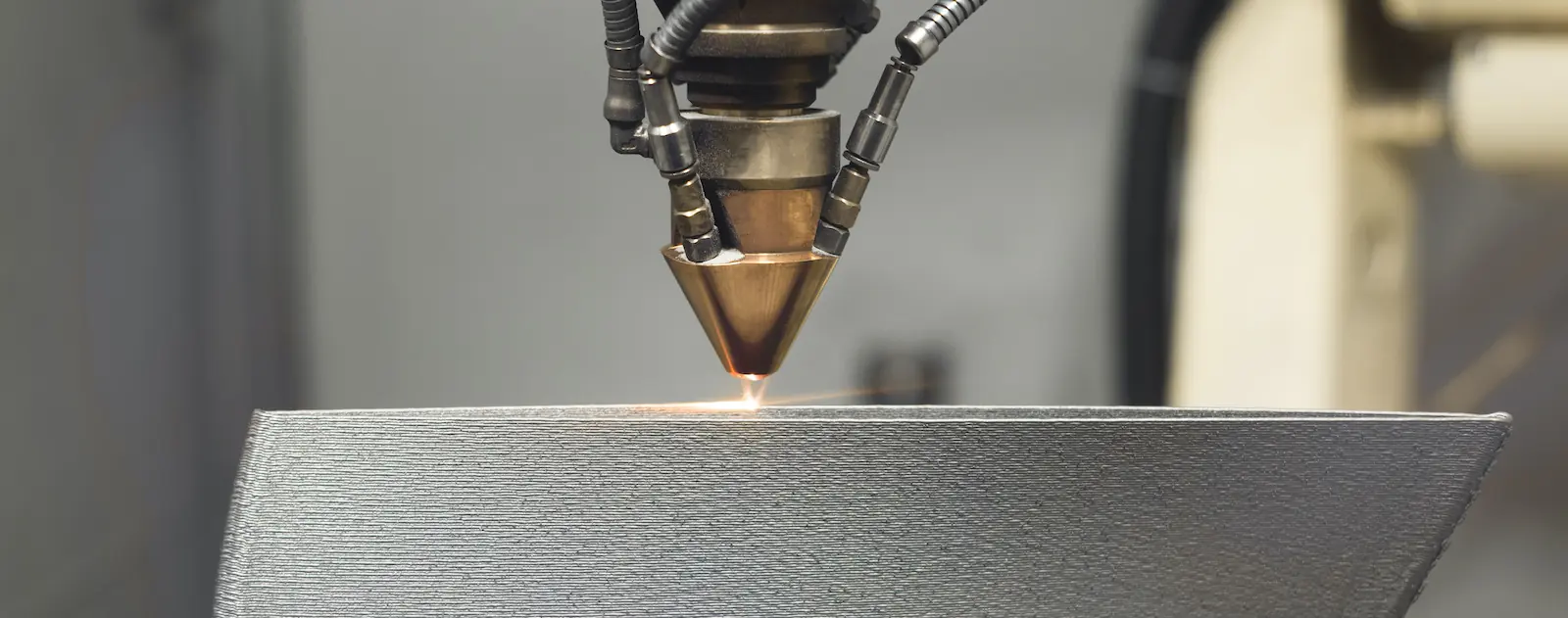
Material selection in LMD and laser cladding should start with the job the surface or buildup has to do, not with a favorite alloy name. For Exafuse, material selection starts with Fe-, Ni-, Co-, copper and specialty steel discussions, with final grade selection tied to substrate, failure mode, temperature, media, finishing, and validation scope. Public Exafuse material examples include 316L, Inconel 625, Inconel 718, C276, C282, Triballoy 400, Triballoy 800, S6, S12, FeCrV15Ni6, WSC, C939, Cu 99.95%, CuNi3Si, 4116, H500 and PH-14.
Which alloy families can be relevant for Exafuse projects?
A practical starting point is Fe-, Ni-, Co-, copper and specialty steel discussions, with grade choice confirmed case by case. That is broad enough to cover repair, coating, and large-part buildup discussions without overclaiming exact grade availability. If a project needs named grades such as nickel alloys, stainless steels, tool steels, cobalt overlays, copper alloys or Inconel-type solutions, those should be confirmed against the actual part.
What named materials has Exafuse publicly discussed?
Exafuse's public 2024 material post discussed more than 1,850 kg of deposited material, including more than 1,600 kg of 316L stainless steel and around 250 kg of advanced materials. Named examples included Inconel 625, C276, C282, Triballoy 400, Triballoy 800, S6, S12, FeCrV15Ni6, WSC, Ni-based alloys, C939, Cu 99.95%, CuNi3Si, 4116, H500 and PH-14. A separate public multi-material nozzle proof used Inconel 625 for the inner structure and Inconel 718 for the outer structure and cooling ribs. Exafuse has also shown a 130 mm drill proof with a tungsten-carbide-containing final coating. These names are examples from public material experience, not automatic approval for every future part.
How do I choose between Fe-, Ni-, and Co-based options?
Start with the failure mechanism and service environment, then work backward to alloy family. The real inputs are abrasion, corrosion, temperature, impact loading, base material compatibility, finishing route, and cost target. Buyers get better answers when they describe the job the part has to survive, not only the hardness they want.
When are Fe-based alloys usually considered?
Fe-based options are often part of the conversation when cost sensitivity, substrate compatibility, general wear resistance, stainless build-up or broader industrial applicability matter. Publicly discussed examples include 316L stainless steel and specialty steel names such as 4116, H500 and PH-14. The final choice still depends on corrosion, heat, duty severity and the finishing plan.
When are Ni-based alloys usually considered?
Ni-based alloys are often relevant for corrosion resistance, high-temperature service, strength, oxidation resistance and some demanding wear-corrosion combinations. Buyers frequently ask about nickel alloys and Inconel-class requirements such as Inconel 625, Inconel 718, C276 or C282 in this context, but the right answer depends on exact media, temperature, base material, and the release criteria for the part. The alloy family should be treated as a decision tool, not as a shortcut label.
When are Co-based alloys usually considered?
Co-based and tribology-focused alloys tend to enter the discussion when hot hardness, wear resistance, galling or edge retention under difficult service conditions is important. Public buyer language may include Triballoy 400, Triballoy 800, S6 or S12, but these names still bring tradeoffs in cost, machinability, and application-specific fit. For that reason, "wear equals cobalt" is too simplistic for a real qualification decision.
Can copper alloys be part of the discussion?
Yes, copper-family work can be part of the discussion where conductivity, cooling function, copper-part repair or a compatible transition is the key issue. Publicly discussed examples include Cu 99.95% and CuNi3Si. Copper routes need technical review because conductivity, heat flow, laser absorption and substrate compatibility can change the process logic.
Can carbide-reinforced coatings be used?
Yes, carbide-reinforced layers can be relevant when abrasion is the dominant problem and the duty cycle supports a harder, more wear-focused surface. But severe abrasion is not the only variable: impact, crack sensitivity, finishing requirements, and the substrate response all matter. A very hard layer can be the wrong answer if toughness and bond integrity are the limiting factors.
What does a tungsten-carbide-containing coating mean for material selection?
It means the review should focus on the surface duty, not only the material label. Exafuse's 130 mm drill proof used a final wear-resistant anti-magnetic coating from an alloy containing tungsten carbide, but suitability still depends on substrate compatibility, toughness, dilution, finishing and inspection evidence.
Can the exact hard coating material stay confidential?
Yes. Exafuse has publicly shown a valve seat ring laser cladding proof where the exact wear-resistant material was not disclosed. That is acceptable as long as the technical review still defines the material family, substrate compatibility, heat-management route, finishing and inspection scope internally or in the agreed project documentation.
Can application-specific powder blends stay confidential?
Yes. For forging hammer and other high-impact tooling repair, the public message can describe the alloy-selection logic without publishing exact powder blends, hardness values or process parameters. The useful buyer question is whether the material route balances wear resistance, toughness, substrate compatibility, heat management and finishing for the duty.
How do corrosion media and temperature change material selection?
They change it materially. The same overlay that performs well in dry abrasion may be wrong in corrosive media, thermal cycling, or combined wear-corrosion service. A useful RFQ should therefore include operating temperature, medium, contamination, and whether the part sees impact, sliding, erosion, or chemical attack.
Does the base material matter, or can the top layer be chosen independently?
The base material always matters. Compatibility, dilution behavior, cracking risk, and final service performance are all influenced by what sits underneath the deposited layer. Material selection is therefore a system decision involving substrate, deposited alloy, heat management, and finishing.
Should the rebuilt area always use the same alloy as the original part?
Not necessarily. Sometimes matching the substrate is the right repair logic; other times the better decision is to restore geometry and improve the working surface with a more suitable overlay strategy. The important point is to distinguish between dimensional restoration and property upgrade, because they are not always solved by the same alloy choice.
Can Exafuse create material gradients or multi-material transitions?
Potentially, yes, but that should be framed conservatively. Exafuse has publicly shown a 750 mm water-cooled nozzle design made with two Ni-based alloys by LMD, which is a useful proof point for multi-material feasibility discussions. It still requires case-by-case technical review of material compatibility, transition behavior, dilution, thermal history, finishing and validation scope.
What are common material-selection mistakes buyers make?
The most common mistakes are selecting only by hardness number, ignoring the base material, and underestimating finishing or crack risk. Another frequent mistake is asking for a named alloy before describing the failure mode properly. Good alloy selection starts with the application problem, then narrows to the most defensible material route.
What material information should a customer send for review?
Send the base material if known, target property, wear or corrosion mechanism, operating temperature, medium, duty cycle, finishing requirements, and any restrictions on alloy family or heat input. If the current part is failing, include photos and a short description of how it failed. If a named alloy is mandatory, say why it is mandatory; if the material is confidential, say which information can be used publicly and which has to stay inside the project. That gives engineering a better starting point than a bare request for "harder material."