
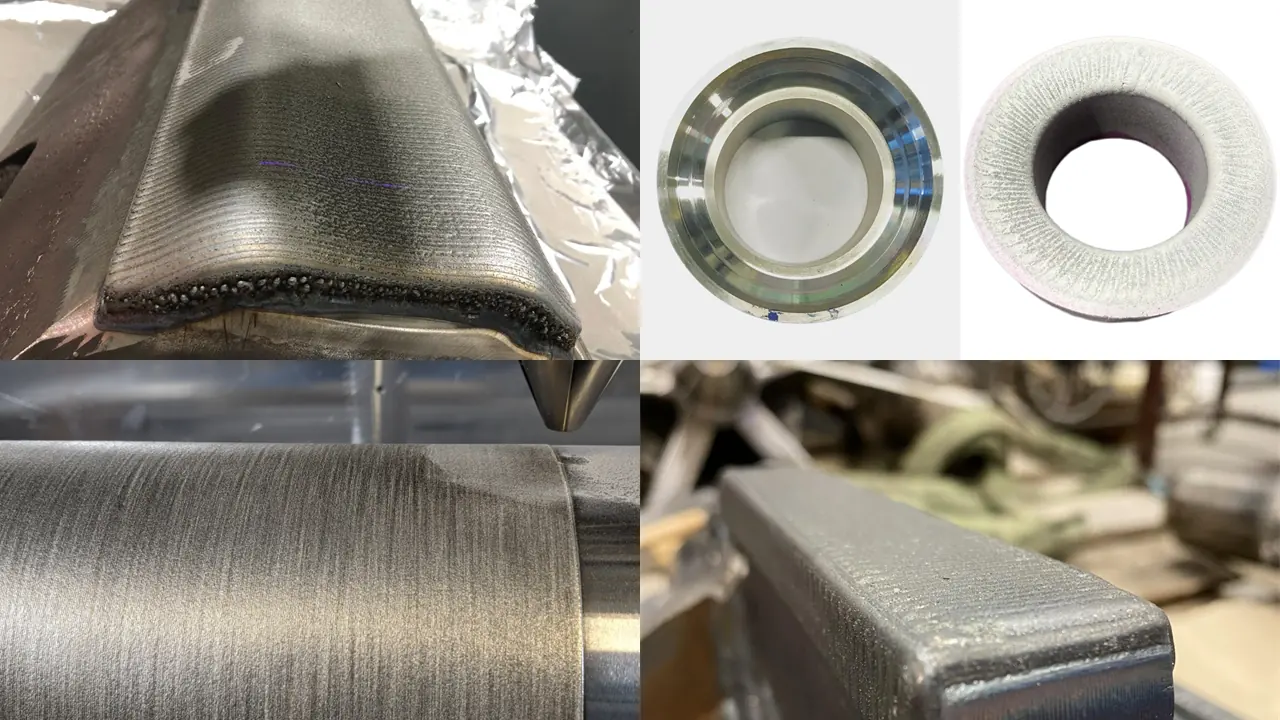
Cladding materials for corrosion or high-temperature service should be selected from the actual exposure environment, not from hardness alone. The key inputs are the media, temperature range, duty cycle, thermal cycling, mechanical load, and the base material underneath. Exafuse's public material proof points include Inconel 625, Inconel 718, C276, C282, C939 and other Ni-based alloys as part of advanced LMD work, but those names are only useful when the service conditions are clear. A coating that looks strong on paper can still be the wrong answer if those conditions are not defined clearly. In laser cladding or Laserauftragschweißen work, this usually means the material decision has to start with the operating environment, not with a generic wear-alloy preference.
Corrosion protection is not the same problem as wear protection
Many buyers start with the idea that a harder layer will solve the issue. That can be wrong when the dominant failure mode is chemical attack, oxidation, or a combined corrosion-and-wear problem. In those cases, the overlay must be chosen for the environment first and only then balanced against hardness, cost, and post-processing needs.
The intake data matters more than the alloy marketing name
Before material selection, buyers should define the process media, temperature range, duty cycle, cleaning chemicals, shutdown and startup behavior, and whether solids or erosion are part of the problem. Those details often matter more than the brand language around the alloy itself.
If the environment is not described properly, the selection discussion becomes vague very quickly and tends to default to overbuilt or misapplied overlays.
Where Ni-based and Co-based overlays usually enter the discussion
Ni-based overlays are commonly considered where corrosion resistance, oxidation resistance, strength or elevated-temperature behavior matter. In practical RFQ language, buyers may name Inconel 625, Inconel 718, C276, C282, C939 or another nickel-family requirement. Co-based overlays are often part of the discussion when hot wear, adhesive wear, or temperature-related surface stability is important. Neither family is automatically correct. Each has to be matched to the service environment and the substrate.
Multi-material thermal proof: water-cooled nozzle
Exafuse has publicly shown a 750 mm water-cooled nozzle design produced by LMD with Inconel 625 for the inner structure and Inconel 718 for the outer structure and cooling ribs. This is useful proof for high-temperature and corrosion discussions because it shows material selection by functional zone rather than one generic alloy choice.
The public example should still be treated as a feasibility signal, not a shortcut around material review. Cooling function, oxidation exposure, corrosion media, strength requirement, wall geometry, finishing and inspection still define whether a similar route is appropriate.
In mixed-service cases, the decision often becomes a balance between chemistry resistance, thermal behavior, wear resistance, dilution sensitivity, and the practicality of finishing and inspection.
Combined wear, corrosion, and heat need a balanced answer
Many industrial surfaces do not fail from one mechanism alone. A part may see abrasion plus corrosion, or oxidation plus thermal cycling, or corrosion plus impact. In those jobs, the best cladding strategy is usually a compromise that protects the part from the dominant risk without creating a new weakness somewhere else.
Geometry and distortion still matter
Even when material selection is driven by corrosion or temperature, geometry still affects whether the project is practical. Thick buildup, local heat input, access to the deposition zone, and the need for later machining or grinding all influence which overlay route is realistic.
Validation should match the environment being claimed
Claims about corrosion or temperature performance should be supported by the right validation logic. Depending on the application, that may include metallographic review, hardness checks, dimensional inspection, or application-specific testing. The safe rule is simple: the more demanding the environment, the more specific the validation plan should be.
What to send for a corrosion or temperature review
Send the base material if known, describe the media and temperature conditions, note whether thermal cycling or shutdown cleaning is part of the process, and include the geometry of the affected zone. If the inquiry already specifies an Inconel-type, C276, C282, C939 or other Ni-based route, include the reason for that requirement and any internal approval boundary. Photos of damage, a short service-life history, and any inspection or documentation requirements make the material review far more accurate.