Proof and retrieval layer

Connect the claim to a proof story, technical answer, FAQ block or research context before sending project data.

FAQ

Direct answers for LMD, repair and laser cladding decisions.

Get concise answers on process fit, repair economics, materials, inspection, procurement inputs and when LMD is not the right route.

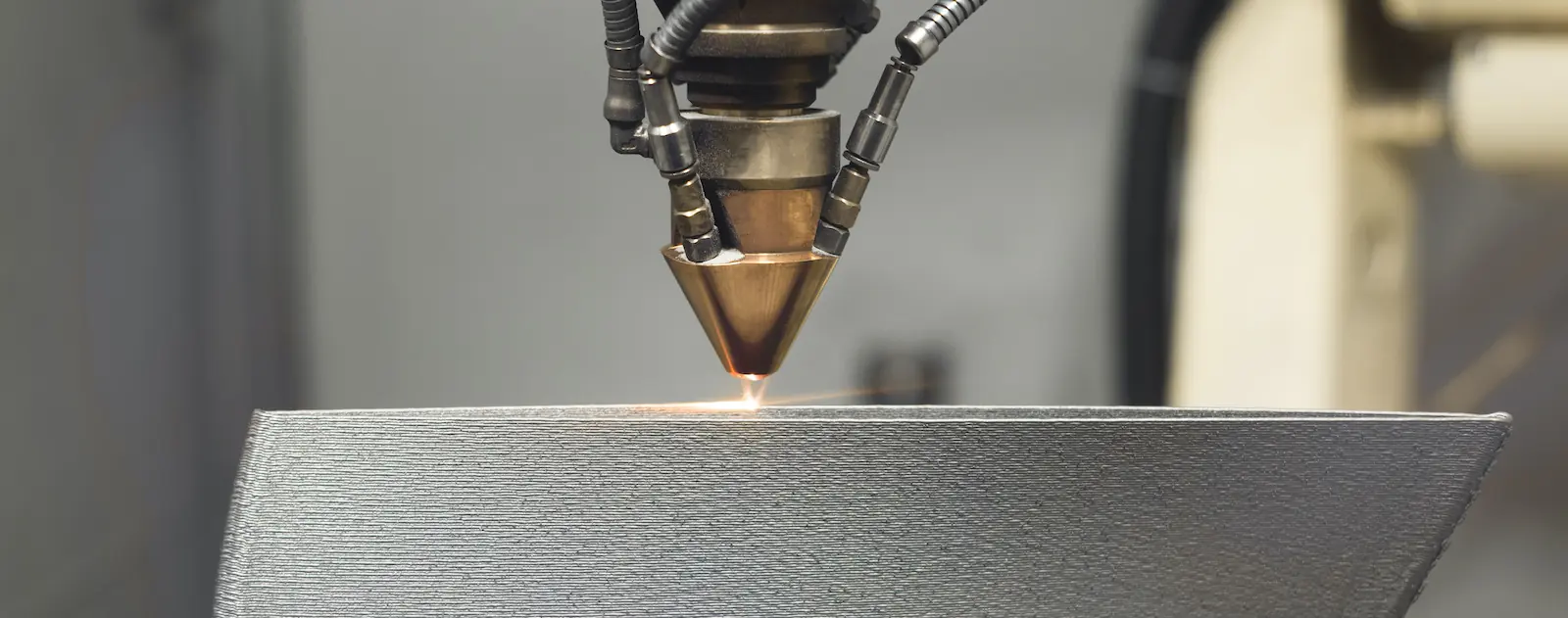
Laser Metal Deposition process adding metal to a component
FAQ01 Laser Metal Deposition (LMD) FAQ: Capabilities, Limits, and Typical Projects

Laser Metal Deposition (LMD) is a laser-based form of Directed Energy Deposition (DED / DED-LB/M) used to manufacture, modify, repair, or coat metal parts by feeding powder into a laser-created melt pool. For Exafuse, it is most relevant when a component is large, high value, worn locally, or better served by adding material only where it is needed instead of machining a full part from solid stock.

What is Laser Metal Deposition (LMD)?

LMD builds or restores metal by feeding powder into a laser-created melt pool and depositing overlapping weld beads layer by layer. In practice, that means the same process family can be used for new-build geometry, repair build-up, local feature addition, and laser cladding. The plain-language German term is often Laserauftragschweißen, while standards-driven conversations may use Directed Energy Deposition or DED-LB/M.

Is LMD the same as DED, DED-LB/M, or laser cladding?

LMD is a laser-based subset of Directed Energy Deposition. DED is the broader category; DED-LB/M is the laser-beam variant in standards-style terminology. Laser cladding usually describes the coating or wear-protection use case within the same process family, while LMD can also refer to repair and 3D build-up work.

Can LMD build a part and add a coating in one workflow?

It can be evaluated. Exafuse has publicly shown a 130 mm "Bombenbohrer" drill proof where LMD was used for both part fabrication from metal powder and final wear-resistant anti-magnetic coating from an alloy containing tungsten carbide. The route still depends on geometry, material compatibility, surface function, finishing and inspection.

What kinds of projects are a good fit for LMD?

LMD is strongest when the project involves large or awkwardly sized metal parts, localized damage, feature addition, or a near-net-shape build that will be finished afterward. It is also attractive when the part is too valuable, too slow to replace, or too material-intensive for a fully subtractive route. Typical buyer questions combine geometry, downtime, alloy family, and post-processing needs, not just "Can you 3D print this?"

What part sizes make sense for Exafuse?

Exafuse positions LMD for large metal components rather than very small fine-detail parts. The 3-axis Titan LMD system provides 4 m3 build space for components up to 2 m x 1 m x 2 m. The 6-axis robotic LMD system has a 6 x 5 x 4 m installation space, 2-axis positioners and rotary-table support for components up to 1,000 kg. Practical feasibility still depends on geometry, fixturing, handling, finishing and the validation scope for the part.

What does Exafuse have in-house for LMD work?

Exafuse operates two LMD routes: the 3-axis Titan for defined large build space and the 6-axis robotic system for complex shapes, contour-following surfaces, repair access and larger installation-space logic. The company also has in-house post-processing support including milling, grinding, sandblasting, plasma cutting and heat-treatment equipment, plus microscopy and metallographic preparation capability for evaluating surfaces, welds and cross-sections. That matters because industrial buyers usually need a process chain, not just deposition alone.

What materials does Exafuse discuss publicly?

Material selection often starts with Fe-, Ni-, and Co-based alloy families. That covers the main industrial material classes buyers expect to discuss for repair, coating, and large-part buildup.

What tolerances and surface quality are typical with LMD?

LMD is usually a near-net-shape process, not a final-finish process straight off the machine. Functional surfaces, fits, and tight tolerances normally come from the combined route: deposition first, then machining, grinding, or other finishing as required. If a buyer needs very fine detail, sharp small internal features, or powder-bed-level surface quality directly from the process, LMD may not be the right first choice.

Is post-processing required?

Often yes. The exact mix depends on the part and service: a repair may need local machining and inspection, while a new-build part may need more substantial finishing, heat-treatment steps, or dimensional correction. Exafuse can credibly discuss post-processing as part of the offer because the capability file confirms in-house support for multiple downstream steps.

How is quality checked on an LMD job?

The answer depends on the part risk and customer acceptance criteria, but the core logic is clear: you do not validate only by visual appearance. Typical checks can include dimensional inspection, agreed NDT, and metallographic review where that is part of the scope. Exafuse can credibly reference in-house microscopy and metallographic preparation for evaluating welds, layers, and cross-sections.

What data should a buyer send for a feasibility review?

Send the CAD model or drawing if available, overall dimensions, approximate weight, base material, target function of the deposited area, tolerance requirements, and any post-processing expectations. For repair or modification, include photos of the damaged zone, a short failure description, and the production deadline. If qualification is important, also state required documentation, inspection methods, and whether an NDA is needed.

What drives lead time on an LMD project?

Lead time is usually driven by five things: intake quality, material choice, deposition volume, finishing effort, and validation scope. A small local repair with clear drawings and a known base material can move very differently from a new-build large part that needs machining and inspection planning. Buyers shorten the quoting cycle most when they send complete technical inputs early.

When is LMD not the right process?

LMD is usually a poor fit for very small fine-feature parts, dense internal lattices better suited to PBF/SLM, low-value commodity parts, or components with unknown damage that cannot be validated properly. It can also be the wrong choice when the buyer expects final tolerances without post-processing or when the economics favor standard stock plus conventional machining. Saying "not a fit" clearly is part of the trust model, not a weakness.

Metal AM

Request a process-selection feasibility review

Send CAD, material, approximate size and target finish. Exafuse can review whether LMD, SLM or a hybrid route is the practical process path.

Start manufacturing RFQ
FAQ02 Laser Cladding FAQ: Wear Protection, Distortion, and Applications

Laser cladding is the LMD use case focused on coating, wear protection, corrosion protection, or local surface rebuild rather than full-part additive manufacture. It is most useful when a buyer needs a metallurgically bonded layer exactly where damage or wear occurs, without replacing the whole component.

What is laser cladding?

Laser cladding uses a laser-created melt pool and added powder to place a new layer onto the component surface. In Exafuse language, it sits in the same process family as LMD and DED, but the commercial job is different: the goal is usually surface protection, local rebuild, or function upgrade rather than a full new-build part. Buyers often search for laser cladding, laser coating, Laserauftragschweißen, or wear-protection overlay for the same need.

When is laser cladding better than a conventional coating or full replacement?

Laser cladding is worth evaluating when only selected zones need protection, the base part is still valuable, and the buyer wants a metallurgically bonded layer rather than a purely mechanical surface deposit. It is also attractive when a component combines two problems at once: restore lost geometry and improve surface performance for the next service cycle. If the whole part is cheap, easily replaced, or too damaged in the substrate, replacement may be the better route.

What is the difference between laser cladding and thermal spraying?

The core distinction is the bonding mechanism. Laser cladding forms a metallurgical bond by melting material into the surface zone, while thermal spraying deposits material by a different mechanism and may be selected for other heat, thickness, area-coverage, or economics reasons. For buyers, the decision should be tied to failure mode, substrate sensitivity, bonding requirement, and how much post-processing or validation is needed.

What wear and corrosion problems does laser cladding address?

Typical fit questions involve abrasion, erosion, adhesive wear, corrosion, oxidation, or mixed wear-corrosion conditions. The key is not just naming the problem but understanding the duty: contact mode, temperature, media, impact severity, and whether the damage is local or distributed. That is why a good intake asks about failure mechanism before it talks about alloy selection.

Can laser cladding be used for valve seat rings?

It can be evaluated, and Exafuse has publicly shown a valve seat ring laser cladding workflow with oven preheating and LMD application of a hard wear-resistant coating route. Valve seat rings are a useful example because the value is local surface protection, but feasibility still depends on base material, access, heat management, finishing and inspection.

Can laser cladding reinforce forging hammers or impact-wear tools?

It can be evaluated when the damaged or wear-critical zone is local, the base tool is suitable for repair, and final machining or grinding plus inspection can be planned. Forging hammers are a high-impact example, so the alloy route has to balance wear resistance with toughness, bond quality, crack risk and final geometry.

Can laser cladding be part of a build-and-coat LMD workflow?

Yes, it can be evaluated. Exafuse has publicly shown a 130 mm drill proof where LMD was used to build the part geometry and then add a final wear-resistant anti-magnetic coating from an alloy containing tungsten carbide. The coating still has to be reviewed against the substrate, surface duty, finishing route and inspection plan.

Can Exafuse coat only local regions instead of the full part?

Yes, that is one of the main reasons buyers choose laser cladding. Local deposition is useful when only edges, seats, bores, sealing zones, or other high-load regions need reinforcement. Geometry access, clamping, and path strategy still matter, so "local only" should be checked against the actual part rather than assumed.

Does laser cladding create a heat-affected zone or distortion risk?

Yes, heat is still part of the process, so there is always some heat-affected-zone and distortion discussion. The practical question is not "zero heat" but whether the thermal load is acceptable for the geometry, base material, and duty of the part. Deposition strategy, preheating or post-heating where appropriate, and finishing steps all influence the outcome.

Does preheating make a hard coating crack-free?

Preheating can help manage thermal gradients and cracking risk in selected laser cladding jobs, but it is not a universal guarantee. Hard coating work still depends on substrate, coating material, dilution, geometry, cooling route, finishing and the agreed inspection method.

Which alloy families are typically considered?

Material selection often starts with Fe-, Ni-, and Co-based alloy families. That gives enough structure to talk about wear protection, corrosion resistance, and high-temperature use cases without overcommitting to a specific grade before review. Where buyers ask about exact grades or hard-particle systems, the final selection should be tied to the substrate, failure mode, and validation plan.

How thick can a laser-clad layer be?

That should be framed as application-dependent rather than a one-line universal number. Single-layer and multi-layer strategies both exist, and the practical answer depends on alloy choice, dilution limits, residual stress risk, finishing allowance, and the function of the deposited zone.

How do you verify bonding, dilution, and layer quality?

Bond quality is not something buyers should accept as a slogan. Depending on the part, verification can include dimensional inspection, agreed NDT, metallographic preparation, and microscopy of cross-sections where the scope requires it. Exafuse can credibly discuss microscopy and metallographic preparation because those capabilities are confirmed in the equipment file.

Can laser cladding also rebuild worn geometry, or is it only for thin protective layers?

It can do both, but the right answer depends on the size of the lost material and what the final geometry has to do in service. In some jobs, the layer is mainly protective; in others, the process also restores functional geometry before finishing. Buyers should think in terms of "protect only," "restore only," or "restore and protect" because each route affects alloy choice and inspection planning.

What should I send for a coating recommendation?

Send photos or drawings of the part, base material if known, the damaged or wear-critical zone, the operating media, temperature, and the main failure mode. Also include whether the problem is abrasion, corrosion, oxidation, sliding contact, impact, or a mixed condition, plus any deadline and dimensional requirements. For hard coatings, valve seats or sealing surfaces, include final finish, preheating limits and crack-inspection expectations. The more specific the failure description, the faster the alloy discussion becomes useful.

When is laser cladding not the right choice?

It is often the wrong route when the substrate is too compromised, the geometry cannot be accessed safely, the required feature is extremely fine, or the economics favor a full new part. It may also be a poor fit if the buyer needs a process chosen only on headline hardness or thickness without discussing dilution, cracking risk, finishing, and validation. Good coating decisions are system decisions, not just material picks.

Coating recommendation

Get a wear or corrosion coating recommendation

Send failure mode, base material, surface zone, environment and target property. The next step is an alloy and layer strategy.

Get coating recommendation
FAQ03 Repair vs Replace FAQ: Economics, Risk, and Maintenance Scheduling

Repair is usually worth evaluating when the damage is localized, the part is expensive or slow to replace, and the restored zone can be inspected against clear acceptance criteria. Replace is often safer when the base component has broader damage, unknown condition, or qualification requirements that a repair route cannot satisfy economically or technically.

When should I consider LMD repair instead of replacement?

Consider repair when the part still has a sound base structure and the failure is concentrated in a limited zone such as a worn edge, seat, tooth, bore, or shaft area. Repair also becomes attractive when the replacement lead time creates operational risk or when the part is high-value enough that selective material buildup is more rational than full remanufacture. The decision gets stronger when the repaired zone can be inspected clearly after the work.

When is replacement safer than repair?

Replacement is usually the safer route when the component has systemic damage, hidden cracking, unknown material condition, or service-critical requirements that cannot be re-qualified through the proposed repair workflow. It is also safer when the damage extends so broadly that the project is no longer really a local rebuild. A good repair supplier should be willing to say "replace it" when the risk picture does not support a repair route.

How do I compare total cost properly?

Do not compare only quote price. Compare full replacement cost, lead time, downtime cost, disassembly and logistics, machining, inspection, reinstallation, and the risk cost of getting the decision wrong. In many plants, downtime and spare-part delay outweigh the pure manufacturing delta between repair and replacement.

How does downtime change the decision?

Downtime often dominates the economics, especially for critical plant equipment or long-lead spare parts. A repair option that looks only moderately cheaper can still be the better commercial choice if it restores service weeks earlier. Maintenance teams should therefore compare calendar impact, not just invoice value.

What technical information reduces repair risk early?

The most useful inputs are the base material, failure location, photos of the damaged zone, overall dimensions, critical tolerances, and the operating duty of the part. If the buyer has prior failure history, maintenance notes, or inspection records, that can materially improve the repair decision. Unknowns are not fatal, but they increase the need for intake inspection before a process route is fixed.

What acceptance criteria should we agree before starting a repair?

Agree the success criteria before deposition begins, not after the invoice is issued. That usually means final dimensions, machining allowance, functional surfaces, any crack or bond-related inspection requirement, and the documentation the buyer expects at release. Clear acceptance criteria reduce commercial disputes and make it easier to decide whether repair is the right path at all.

Can a repaired part be stronger or last longer than the original?

Sometimes yes, but this should never be treated as an automatic promise. A repair may allow the worn zone to be rebuilt with a more suitable alloy strategy or a protective overlay, but the result depends on substrate compatibility, geometry, duty cycle, and validation scope. In practice, repair can combine restoration with surface-property improvement where the application supports it.

Can LMD repair forging hammers or high-impact tooling?

It can be evaluated when wear is local, the base tool is still viable, the damaged zone can be reached, and the rebuilt surface can be finished and inspected. Exafuse has publicly described LMD-enhanced forging hammer work using local reinforcement, metallurgical bonding and application-specific alloy strategy. The repair decision still depends on crack condition, base material, impact duty and release criteria.

How do we decide under time pressure?

Time pressure is exactly when teams make bad replacement-only decisions. The fast route is to gather the minimum technical package quickly: photos, dimensions, material if known, failure description, and the business deadline. Then decide in sequence: is the base part still viable, can the damaged zone be accessed, can the repair be validated, and does the timing beat the replacement path?

What should maintenance or procurement teams prepare before a failure happens?

Keep drawings, material records, photos of critical spares, acceptable wear limits, and supplier contacts organized before the plant is in crisis mode. It also helps to define which parts are truly downtime-critical and what documentation is required for putting a repaired part back into service. Pre-failure preparation turns repair from an emergency gamble into a planned option.

When is LMD repair not a good fit?

LMD repair is often the wrong route when the part is low value, easy to replace from stock, too small for the process economics, or damaged in ways that cannot be inspected and released with confidence. It may also be a poor fit if the expected result is "as new" without agreement on geometry, inspection, and finishing. Repair should be framed as an engineering decision, not a generic salvage reflex.

What should I send for a repair assessment?

Send overall part dimensions, estimated weight, base material if known, photos of the defect, a short description of the failure mode, and the business deadline. Add drawings or CAD if available, plus any known tolerance or inspection requirements. If the part is time-critical, say so explicitly so the repair-vs-replace conversation can be prioritized around plant risk rather than generic lead-time assumptions.

Repair assessment

Send photos and dimensions for repair review

Best for worn, damaged or undersized high-value parts where replacement cost, lead time or downtime is painful.

Request repair assessment
FAQ04 Materials and Alloys FAQ: Selecting Fe/Ni/Co Options for Wear and Corrosion

Material selection in LMD and laser cladding should start with the job the surface or buildup has to do, not with a favorite alloy name. For Exafuse, material selection starts with Fe-, Ni-, Co-, copper and specialty steel discussions, with final grade selection tied to substrate, failure mode, temperature, media, finishing, and validation scope. Public Exafuse material examples include 316L, Inconel 625, Inconel 718, C276, C282, Triballoy 400, Triballoy 800, S6, S12, FeCrV15Ni6, WSC, C939, Cu 99.95%, CuNi3Si, 4116, H500 and PH-14.

Which alloy families can be relevant for Exafuse projects?

A practical starting point is Fe-, Ni-, Co-, copper and specialty steel discussions, with grade choice confirmed case by case. That is broad enough to cover repair, coating, and large-part buildup discussions without overclaiming exact grade availability. If a project needs named grades such as nickel alloys, stainless steels, tool steels, cobalt overlays, copper alloys or Inconel-type solutions, those should be confirmed against the actual part.

What named materials has Exafuse publicly discussed?

Exafuse's public 2024 material post discussed more than 1,850 kg of deposited material, including more than 1,600 kg of 316L stainless steel and around 250 kg of advanced materials. Named examples included Inconel 625, C276, C282, Triballoy 400, Triballoy 800, S6, S12, FeCrV15Ni6, WSC, Ni-based alloys, C939, Cu 99.95%, CuNi3Si, 4116, H500 and PH-14. A separate public multi-material nozzle proof used Inconel 625 for the inner structure and Inconel 718 for the outer structure and cooling ribs. Exafuse has also shown a 130 mm drill proof with a tungsten-carbide-containing final coating. These names are examples from public material experience, not automatic approval for every future part.

How do I choose between Fe-, Ni-, and Co-based options?

Start with the failure mechanism and service environment, then work backward to alloy family. The real inputs are abrasion, corrosion, temperature, impact loading, base material compatibility, finishing route, and cost target. Buyers get better answers when they describe the job the part has to survive, not only the hardness they want.

When are Fe-based alloys usually considered?

Fe-based options are often part of the conversation when cost sensitivity, substrate compatibility, general wear resistance, stainless build-up or broader industrial applicability matter. Publicly discussed examples include 316L stainless steel and specialty steel names such as 4116, H500 and PH-14. The final choice still depends on corrosion, heat, duty severity and the finishing plan.

When are Ni-based alloys usually considered?

Ni-based alloys are often relevant for corrosion resistance, high-temperature service, strength, oxidation resistance and some demanding wear-corrosion combinations. Buyers frequently ask about nickel alloys and Inconel-class requirements such as Inconel 625, Inconel 718, C276 or C282 in this context, but the right answer depends on exact media, temperature, base material, and the release criteria for the part. The alloy family should be treated as a decision tool, not as a shortcut label.

When are Co-based alloys usually considered?

Co-based and tribology-focused alloys tend to enter the discussion when hot hardness, wear resistance, galling or edge retention under difficult service conditions is important. Public buyer language may include Triballoy 400, Triballoy 800, S6 or S12, but these names still bring tradeoffs in cost, machinability, and application-specific fit. For that reason, "wear equals cobalt" is too simplistic for a real qualification decision.

Can copper alloys be part of the discussion?

Yes, copper-family work can be part of the discussion where conductivity, cooling function, copper-part repair or a compatible transition is the key issue. Publicly discussed examples include Cu 99.95% and CuNi3Si. Copper routes need technical review because conductivity, heat flow, laser absorption and substrate compatibility can change the process logic.

Can carbide-reinforced coatings be used?

Yes, carbide-reinforced layers can be relevant when abrasion is the dominant problem and the duty cycle supports a harder, more wear-focused surface. But severe abrasion is not the only variable: impact, crack sensitivity, finishing requirements, and the substrate response all matter. A very hard layer can be the wrong answer if toughness and bond integrity are the limiting factors.

What does a tungsten-carbide-containing coating mean for material selection?

It means the review should focus on the surface duty, not only the material label. Exafuse's 130 mm drill proof used a final wear-resistant anti-magnetic coating from an alloy containing tungsten carbide, but suitability still depends on substrate compatibility, toughness, dilution, finishing and inspection evidence.

Can the exact hard coating material stay confidential?

Yes. Exafuse has publicly shown a valve seat ring laser cladding proof where the exact wear-resistant material was not disclosed. That is acceptable as long as the technical review still defines the material family, substrate compatibility, heat-management route, finishing and inspection scope internally or in the agreed project documentation.

Can application-specific powder blends stay confidential?

Yes. For forging hammer and other high-impact tooling repair, the public message can describe the alloy-selection logic without publishing exact powder blends, hardness values or process parameters. The useful buyer question is whether the material route balances wear resistance, toughness, substrate compatibility, heat management and finishing for the duty.

How do corrosion media and temperature change material selection?

They change it materially. The same overlay that performs well in dry abrasion may be wrong in corrosive media, thermal cycling, or combined wear-corrosion service. A useful RFQ should therefore include operating temperature, medium, contamination, and whether the part sees impact, sliding, erosion, or chemical attack.

Does the base material matter, or can the top layer be chosen independently?

The base material always matters. Compatibility, dilution behavior, cracking risk, and final service performance are all influenced by what sits underneath the deposited layer. Material selection is therefore a system decision involving substrate, deposited alloy, heat management, and finishing.

Should the rebuilt area always use the same alloy as the original part?

Not necessarily. Sometimes matching the substrate is the right repair logic; other times the better decision is to restore geometry and improve the working surface with a more suitable overlay strategy. The important point is to distinguish between dimensional restoration and property upgrade, because they are not always solved by the same alloy choice.

Can Exafuse create material gradients or multi-material transitions?

Potentially, yes, but that should be framed conservatively. Exafuse has publicly shown a 750 mm water-cooled nozzle design made with two Ni-based alloys by LMD, which is a useful proof point for multi-material feasibility discussions. It still requires case-by-case technical review of material compatibility, transition behavior, dilution, thermal history, finishing and validation scope.

What are common material-selection mistakes buyers make?

The most common mistakes are selecting only by hardness number, ignoring the base material, and underestimating finishing or crack risk. Another frequent mistake is asking for a named alloy before describing the failure mode properly. Good alloy selection starts with the application problem, then narrows to the most defensible material route.

What material information should a customer send for review?

Send the base material if known, target property, wear or corrosion mechanism, operating temperature, medium, duty cycle, finishing requirements, and any restrictions on alloy family or heat input. If the current part is failing, include photos and a short description of how it failed. If a named alloy is mandatory, say why it is mandatory; if the material is confidential, say which information can be used publicly and which has to stay inside the project. That gives engineering a better starting point than a bare request for "harder material."

Coating recommendation

Get a wear or corrosion coating recommendation

Send failure mode, base material, surface zone, environment and target property. The next step is an alloy and layer strategy.

Get coating recommendation
FAQ05 Quality and Inspection FAQ: Porosity, CT, NDT, and Metallurgy

Quality in LMD and laser cladding is not one number and not one final inspection step. Buyers should think in terms of a full validation stack: geometry, bond quality, internal defect risk, metallurgy, and agreed release criteria that match the function of the part.

What quality risks matter most in LMD and laser cladding?

The core risk set usually includes porosity, cracking, excessive dilution, weak or inconsistent bonding, distortion, wrong final geometry, and unsuitable surface condition for service. Which of those matters most depends on the application. A wear overlay, a repaired shaft, and a large near-net-shape build do not carry the same risk priorities.

What causes porosity?

Porosity can be influenced by powder condition, contamination, shielding quality, melt-pool stability, surface preparation, energy input, and path strategy. That is why "same machine, same result" is not a complete quality argument on its own. The whole process chain matters, from prep through deposition and finishing.

What causes cracking or bond-quality problems?

Cracking and bond-related issues can be driven by alloy mismatch, excessive thermal stress, dilution behavior, poor surface condition, or the wrong deposition strategy for the geometry. These are engineering problems, not just operator problems. Good qualification work therefore starts with substrate, material route, and heat-management logic before production begins.

How is metallurgical bonding verified?

Bond quality should be checked with methods appropriate to the part, not assumed from appearance alone. Depending on the scope, this can include metallographic cross-sections, microscopy, dimensional confirmation, and other agreed inspection steps. The important principle is that the release logic should be defined before the part is processed.

What quality questions matter for a build-and-coat LMD part?

A build-and-coat workflow needs evidence for both geometry and surface function. For a part like the public 130 mm drill proof, the review should separate built geometry, coating layer, bond quality, final finish and the required release evidence instead of treating the video result as qualification by itself.

Does Exafuse have any in-house quality capability?

Yes, the confirmed approved claim is that Exafuse has in-house microscopy and metallographic preparation capability. That supports evaluation of surfaces, welds, cross-sections, and microstructure-related questions. For methods such as CT, UT, PT/MT, or CMM, the page should describe them as part of a possible inspection plan only if the scope and delivery route are clearly defined.

When is CT appropriate?

CT is most useful when internal geometry or internal defect questions cannot be answered well enough by surface-based inspection alone. It can be powerful for some qualification cases, but it is not automatically necessary or economical for every repair or coating job. Buyers should decide on CT based on defect criticality, geometry, and release risk, not because it sounds thorough.

Which NDT methods matter most?

There is no universal winner. The right inspection method depends on what kind of defect or risk matters for the part, where that risk sits, and what the acceptance criteria require. Procurement and engineering teams should ask which method proves the thing they actually care about, rather than requesting a long generic list.

What is dilution, and why does it matter?

Dilution describes how much base material mixes into the deposited material. It matters because it affects chemistry, microstructure, and final performance in the clad or rebuilt zone. Buyers do not need to turn every RFQ into a research program, but they should understand that chemistry at the interface is part of the quality conversation.

Is hardness enough to qualify a repaired or clad part?

No. Hardness can support a validation plan, but hardness alone does not prove bond integrity, internal soundness, geometry, or service life. It is a useful data point when matched to the application, not a substitute for a full release decision.

What matters for high-impact tooling such as forging hammers?

High-impact tooling needs release logic around the working face, bond condition, crack condition, final geometry and previous repair history. A hard deposit can still be the wrong answer if it does not match impact duty, substrate compatibility or inspection requirements. Exafuse's public forging hammer proof story is useful because it connects LMD repair with material strategy and validation planning rather than treating the repair as coating thickness alone.

What should an inspection plan include?

Define the critical zones, the defect types that matter, the methods to be used, the acceptance criteria, the documentation format, and who signs off on deviations. That prevents the common problem of doing technically interesting tests that do not actually answer the buyer's release question. A good inspection plan is short, explicit, and part-specific.

What documentation should buyers ask for?

Ask for the documentation that supports release of the part, not a generic pile of paperwork. That may include dimensional results, agreed inspection outcomes, photos of the rebuilt or coated area, and metallographic or hardness evidence where relevant. The required package should be defined in the quote or PO stage so there is no ambiguity at delivery.

How should buyers think about external labs or specialist testing?

Specialist testing is not a weakness if it is planned and documented properly. The real question is whether the inspection route is appropriate and clearly assigned, not whether every test is done in-house. Where external labs or additional NDT are needed, that should be built into the project scope early.

What should I send if I want to align on quality or inspection?

Send the drawing or CAD if available, the critical zones on the part, the base material if known, and the specific defect or validation concern you want addressed. Also state which acceptance criteria matter, what documentation you need at release, and whether any external inspection method is already required. That makes the inspection discussion practical instead of generic.

PageQualityCase studyCS15: Duisburg Bridge Components with LMD: 750 kg+ Nodes and Handrails from CAD to Validated ProductionArticleA32: Large Structural LMD for Bridge Components: Lessons from the Duisburg Bridge ProjectArticleA09: Porosity in LMD/DED: Root Causes, Detection, and Practical PreventionArticleA10: Metallurgical Validation for Laser Cladding: Bonding, Dilution, Microstructure, HAZArticleA11: Inspection Stack for Industrial Repairs: CT, UT, PT/MT, CMM - What Each ProvesArticleA35: Melt-Pool Monitoring in Laser Metal Deposition: What Process Images Can and Cannot ProveArticleA36: AI in Laser Metal Deposition Process Control: From Decision Support to Closed-Loop ClaimsArticleA37: Image Processing with Neural Networks in LMD: Where Pix2Pix-Style Models FitArticleA30: How to Evaluate LMD Build-and-Coat Workflows: Geometry, Surface Function, and ValidationArticleA31: LMD Coatings on Copper Substrates: Heat Management, Preheating, and ValidationArticleA28: Valve Seat Ring Laser Cladding: Crack-Controlled Wear-Resistant Coating by LMDArticleA29: How to Evaluate Forging Hammer Repair with LMD: Fit, Limits, and RFQ DataCase studyCS13: 130 mm Bombenbohrer LMD Build-and-Coat Workflow: From Powder to Functional DrillCase studyCS14: Turbo Generator Rotor Wedge Coating with LMD: Heat-Controlled CuNi2SiCr on Copper SubstrateResearch noteCS07: Research Topic: Detecting and Reducing Porosity Risk in LMDCase studyCS05: Valve Seat and Wear Ring LMD Coating with Crack-Controlled Co-Based Wear Material

Quality alignment

Align on inspection and documentation before production

For projects where acceptance criteria, porosity risk, metallography, hardness or buyer documentation will decide the route.

Request validation plan
FAQ06 LMD vs SLM FAQ: Choosing Between DED and PBF for Your Part

LMD and SLM solve different industrial problems. LMD/DED is typically stronger for large parts, repair, local feature addition, and bead-based near-net-shape builds, while SLM/LPBF is typically stronger for small, intricate parts with fine internal features and tighter as-built geometric control inside a powder-bed workflow.

What is the short difference between LMD and SLM?

LMD feeds material into a laser-created melt pool and deposits it where needed, often onto an existing part or a large free-form build area. SLM, usually discussed under LPBF or PBF, selectively fuses powder inside a powder-bed chamber. The most practical buying difference is not the acronym but the build logic: deposition route versus powder-bed route.

Which process is usually better for large parts?

LMD is usually the stronger candidate for large parts because it is not constrained by a powder-bed chamber in the same way as SLM. That matters for big industrial components, local rebuilds, and situations where only part of the geometry needs to be added.

Which process is usually better for small, intricate geometry?

SLM is generally stronger for fine internal channels, lattice structures, compact precision parts, and geometries that depend on powder-bed-level detail. If the design logic depends on small unsupported internal complexity, SLM often enters the conversation first. LMD is a different kind of strength, not a substitute for every powder-bed use case.

Which process is better for repair?

LMD is usually the stronger repair route because it can add material directly onto an existing part. That makes it suitable for rebuilding teeth, shafts, edges, seats, and other local damage zones where replacement would waste the rest of the component. SLM is primarily a new-build process, not a repair-first process.

Which process is better for laser cladding or wear protection?

That is LMD territory. Laser cladding sits within the LMD/DED family and is used for local surface protection, rebuild, and function upgrade. If the commercial problem is wear, corrosion, or restoring a local surface, buyers are usually not deciding between cladding and SLM in the first place.

Which process gives better as-built surface finish and fine-feature accuracy?

In general, SLM has the advantage when the question is very fine geometry and tighter as-built detail. LMD usually works in a coarser, near-net-shape regime and often expects machining or grinding afterward for critical surfaces. Buyers should compare the final part requirement, not only the printed appearance.

Does either process eliminate machining?

Usually no. Both can reduce conventional machining in the right application, but neither should be sold as "no finishing required" by default. For LMD in particular, final functional tolerances often come from a hybrid route: deposit first, then machine, grind, or otherwise finish to requirement.

How does quantity affect the decision?

For very low quantities, one-offs, repairs, and large custom parts, LMD can be commercially attractive because it avoids tooling and can add material only where needed. SLM becomes attractive when the part geometry truly benefits from powder-bed freedom and the whole component is designed around that logic. Quantity matters, but geometry and function usually matter more.

Which process is better for difficult-to-machine alloys?

Both can be relevant, but for different reasons. If the part is large, repair-oriented, or best built near-net before finishing, LMD may offer the better route. If the value lies in small internal complexity or compact high-detail geometry, SLM may be stronger.

How should buyers choose between LMD and SLM?

Compare part size, feature scale, repair need, internal complexity, material, quantity, tolerance route, finishing plan, and qualification risk. A useful shortcut is this: if the part is large, worn, or only needs material added locally, LMD should be evaluated early. If the value lies in small detailed geometry throughout the whole part, SLM is usually the stronger candidate.

What should I send if I want process-selection help?

Send the CAD model or drawing, overall size, material, required geometry quality, and whether the job is a new build, repair, or coating problem. Also say which features are critical and whether there is a chamber-size constraint, lead-time problem, or finishing limitation. That turns "Which process is better?" into an engineering decision instead of a generic comparison.

Metal AM

Request a process-selection feasibility review

Send CAD, material, approximate size and target finish. Exafuse can review whether LMD, SLM or a hybrid route is the practical process path.

Start manufacturing RFQ
FAQ07 DfAM for Industrial Metal Parts FAQ: Geometry, Tolerance, and Post-Machining

DfAM for LMD should be treated as design for a bead-based, near-net-shape process, not as design for a powder-bed process. The strongest designs plan for access, heat management, machining allowance, datum strategy, and future repairability from the beginning instead of treating additive deposition as a direct drop-in replacement for subtractive CAD.

How is DfAM for LMD different from DfAM for SLM?

LMD design is built around deposition beads, head access, heat input, stock allowance, and finishing strategy. SLM design is built around powder-bed constraints and usually allows much finer internal geometric freedom. If a team designs an LMD part as if it were an SLM part, they usually create avoidable risk and post-processing cost.

What geometry rules reduce LMD risk?

Plan clear access for the deposition head, avoid unnecessary fine details, define where machining stock belongs, and keep inspection access in mind. The geometry should support a stable deposition path rather than forcing the process into tiny features it is not meant to own. Good LMD design is practical, not ornamental.

How should machining allowance be planned?

Machining allowance should be designed in deliberately, not treated as leftover cleanup. The amount depends on geometry, alloy family, deposition strategy, and the tolerances that matter in service. Exact numbers should only be published after technical review, but the design principle is simple: critical surfaces usually need planned stock for finishing.

Should datums and reference surfaces be designed into the part?

Yes. Without a datum strategy, inspection and finishing become harder than they need to be. In industrial work, the best designs make it clear how the part will be clamped, measured, and machined after deposition.

How can OEMs design parts for future repair?

Add repair pads, sacrificial wear zones, accessible surfaces, and clear material documentation so future rebuilds are easier to qualify. Design-for-repair is not only about surviving the first service cycle; it is about reducing lifetime risk and shortening future maintenance decisions. That is especially useful for high-value large components.

Can LMD reduce machining?

Yes, in the right application it can reduce the amount of material removed compared with machining a full part from solid stock. But that should not be confused with "no machining." Final functional surfaces, fits, and bearing areas often still need conventional finishing.

How should distortion and heat-management risk influence the design?

Parts should be designed with the deposition sequence and thermal behavior in mind, not only the final nominal shape. Thin unsupported areas, awkward transitions, or inaccessible heat-sensitive zones can turn a nominally printable part into a risky one. Good design review therefore looks at geometry, path strategy, and finishing together.

When should a team redesign the part instead of simply printing the existing CAD?

Redesign is usually worth it when the original CAD came from casting, machining, or a repair workaround rather than from an additive-first logic. If the team wants lower waste, less machining, better repairability, or improved local function, the existing geometry should be questioned. Copying legacy CAD exactly often leaves additive value on the table.

How should tolerances be assigned on an LMD part?

Tolerances should be assigned by function and by process stage. Some geometry may be acceptable in the as-deposited condition, while critical surfaces should be allocated to a finishing step. Treating every surface as equally critical usually increases cost without improving part performance.

What should a DfAM review include?

A useful review includes geometry intent, critical surfaces, datum plan, base material, finishing route, inspection requirements, and where the economic value is expected to come from. If repairability matters, the review should also define how future buildup or wear protection will be handled. That makes DfAM a business decision as well as a design decision.

What should a buyer or OEM send for a DfAM assessment?

Send the current CAD model, intended function, critical dimensions, surface requirements, base material, and the preferred manufacturing or repair route if one exists. Also flag whether the part is currently over-machined, difficult to source, or likely to need future repair. That gives Exafuse a basis for commenting on manufacturability and repairability together.

Metal AM

Request a process-selection feasibility review

Send CAD, material, approximate size and target finish. Exafuse can review whether LMD, SLM or a hybrid route is the practical process path.

Start manufacturing RFQ
FAQ08 Procurement FAQ: RFQs, Supplier Qualification, and Documentation

Good procurement for LMD, repair, or laser cladding is mostly an information-quality problem. The stronger the RFQ and acceptance criteria are at the start, the lower the commercial risk later around scope drift, missing documentation, wrong assumptions, and unusable comparisons between suppliers.

What should an RFQ for LMD, repair, or laser cladding include?

At minimum include service type, drawings or CAD, overall dimensions, approximate weight, base material if known, target function of the deposited area, quantity, deadline, and required inspection or documentation. For repair work, add photos of the damaged zone and a short failure description. For coating work, add service environment, wear mechanism, and temperature if relevant.

What files improve quote quality most?

The best inputs are native CAD where available, controlled drawings, photos of the actual part, and any record of the current material or prior failure history. A buyer does not need a perfect data package to start the conversation, but better files usually shorten the quote cycle and reduce assumptions. If the part is urgent, say that clearly so the supplier can prioritize the intake correctly.

How should procurement compare quotes?

Compare total scope, not only deposited-volume price. Review what each quote includes for preparation, deposition, finishing, inspection, documentation, lead time, and exclusions. The cheapest deposition price is often not the lowest-risk project if release criteria, post-processing, or nonconformance handling are vague.

What supplier capability questions matter most?

Ask about relevant process capability, material-family experience, post-processing support, inspection route, and whether the supplier has handled comparable part types or failure modes before. Also ask how they manage ambiguity in incoming data. A supplier who identifies missing information early is often lower risk than one who quotes instantly on thin inputs.

What should procurement ask about materials?

Ask which alloy family is proposed, why it fits the application, what assumptions were made about the base material, and whether any substitution needs approval. That keeps material choice tied to function rather than to generic sales language. For demanding parts, procurement should also confirm what evidence will support the selected material route.

What documentation should a supplier provide?

Request the documentation needed to release the part internally, not a generic document bundle. Depending on the job, that can include quote scope, process route, inspection plan, agreed acceptance criteria, and final release documentation. The documentation package should be defined before PO, not debated after delivery.

How should buyer teams handle NDA and sensitive drawings?

Raise NDA and confidentiality requirements at the beginning of the inquiry, not after technical review has already started. If the part is sensitive, say what files can be shared immediately and what requires protection first. Clear handling of IP and sensitive geometry reduces delay on both sides.

What makes a lead-time promise credible?

A credible lead time is based on scope clarity, material path, finishing plan, and inspection requirements. It should not be treated as a generic number independent of part complexity. Procurement teams should ask what assumptions the promised lead time depends on and what could move it.

What should be clarified before purchase order?

Clarify acceptance criteria, material-substitution rules, inspection responsibilities, documentation format, delivery condition, confidentiality, and how changes will be handled if new information appears during the job. That is especially important for repair work, where intake findings may change the technical route. A good PO lock-down reduces later commercial friction.

What should buyers ask about nonconformance and deviation handling?

Ask what happens if incoming condition differs from the RFQ, if the substrate turns out to be different than expected, or if a deviation is found during processing or inspection. The supplier should be able to explain who decides, how it is documented, and whether work pauses until approval. That is part of qualification, not an edge case.

What internal teams should be involved before issuing the RFQ?

For higher-risk parts, procurement should involve maintenance or engineering early enough to define function, critical dimensions, release criteria, and inspection expectations. An RFQ sent without technical alignment usually produces weak quote comparability and rework later. The best procurement packages are cross-functional even when the PO is not.

What should I send Exafuse first if I want a useful commercial discussion?

Send the drawing or CAD if available, dimensions, weight, base material if known, photos, service problem, deadline, and the documentation you expect at delivery. If the part is urgent or sensitive, say that up front. That is enough to start a serious feasibility and quotation discussion without waiting for a perfect file package.

Procurement

Download the RFQ logic, then request a quote

A good RFQ reduces scope drift. Send service type, part size, material, deadline, tolerances, files and documentation needs.

Start qualified RFQ

Next action

Move from answer to tool.

The FAQ answers the question. The tools help prepare the next technical decision.

Recommended next steps

Continue with the most relevant Exafuse path.

Move from the current topic into the closest service, proof page, technical article, FAQ or feasibility request.