
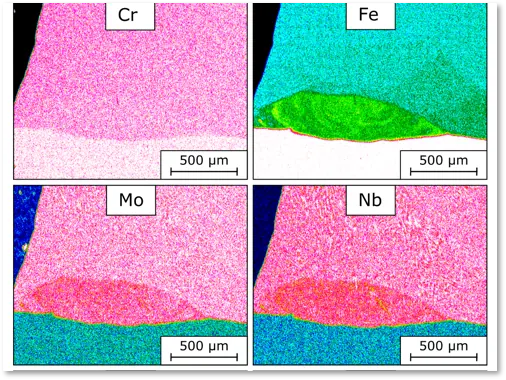
Porosity in LMD and DED is not a cosmetic detail. It is a quality risk that can affect bonding, local properties, release confidence, and the inspection route a buyer needs for a given part family. Whether the process is described as LMD, DED, or Laserauftragschweißen, porosity should be treated as a release question rather than a surface-appearance issue.
Why buyers care about porosity
Porosity matters because internal voids can change how a deposited zone performs under load, wear, pressure, or later finishing. The commercial problem is not only whether pores exist, but whether the remaining defect level is acceptable for the function of the part. That is why porosity should be discussed as part of an acceptance plan, not as a slogan.
Common root causes
Porosity can come from more than one part of the process chain. Powder condition, surface contamination, unstable shielding, melt-pool instability, inappropriate energy input, and poor overlap strategy can all contribute. In practice, that means the prevention plan has to cover preparation, parameter discipline, and build execution together.
A practical way to think about causes and controls
| Risk source | Typical consequence | Control question |
|---|---|---|
| Powder condition or contamination | Unstable deposit quality | Is feedstock condition controlled and appropriate for the job? |
| Surface preparation | Lack of consistency at the interface | Was the substrate prepared for deposition rather than only cleaned visually? |
| Melt-pool instability | Variable bead quality and trapped defects | Is the parameter window stable for this geometry and material route? |
| Overlap and path strategy | Local defect concentration | Does the toolpath support uniform buildup rather than uneven remelting? |
How porosity is detected
No single method answers every porosity question. Visual review can identify obvious surface issues, while metallographic cross-sections and microscopy help evaluate internal structure in sampled zones. Depending on the part and the release risk, additional NDT or external methods may also be part of the plan, but they should be selected deliberately rather than added as a generic checklist.
How porosity is prevented in practice
Prevention starts before deposition by controlling substrate condition, material route, and the stability of the planned build strategy. During production, overlap behavior, thermal control, and path execution matter directly. After production, inspection closes the loop by showing whether the controls were actually effective for the required application.
Acceptance criteria depend on the job
There is no universal industrial answer to "how much porosity is acceptable." A wear-protection overlay, a repaired shaft, and a pressure-sensitive component can require very different release logic. That is why acceptance criteria should be part of the RFQ or technical review, not negotiated after the part has already been processed.
What evidence buyers should request
Buyers should ask for the evidence that supports the release decision they actually have to make. That may include dimensional results, metallographic evidence where relevant, photos of the rebuilt or coated zone, and the agreed inspection outcomes. A vague promise of "high quality" is weaker than a narrow but well-defined validation package.
What to send if porosity risk is a concern
Send the drawing or CAD model, the critical zones on the part, the base material if known, and the defect sensitivity of the application. Also say whether the concern is wear performance, internal soundness, bonding, or later machining behavior. That helps define an inspection plan that matches the real risk instead of defaulting to generic testing.