Capability screen

Use machine envelope, material family, duty and validation needs to decide what is technically worth reviewing.

Technology

Technology at Exafuse: LMD, SLM and hybrid additive routes.

Exafuse compares laser-based metal additive routes by part size, feature detail, repair need, performance target, finishing plan and inspection scope.

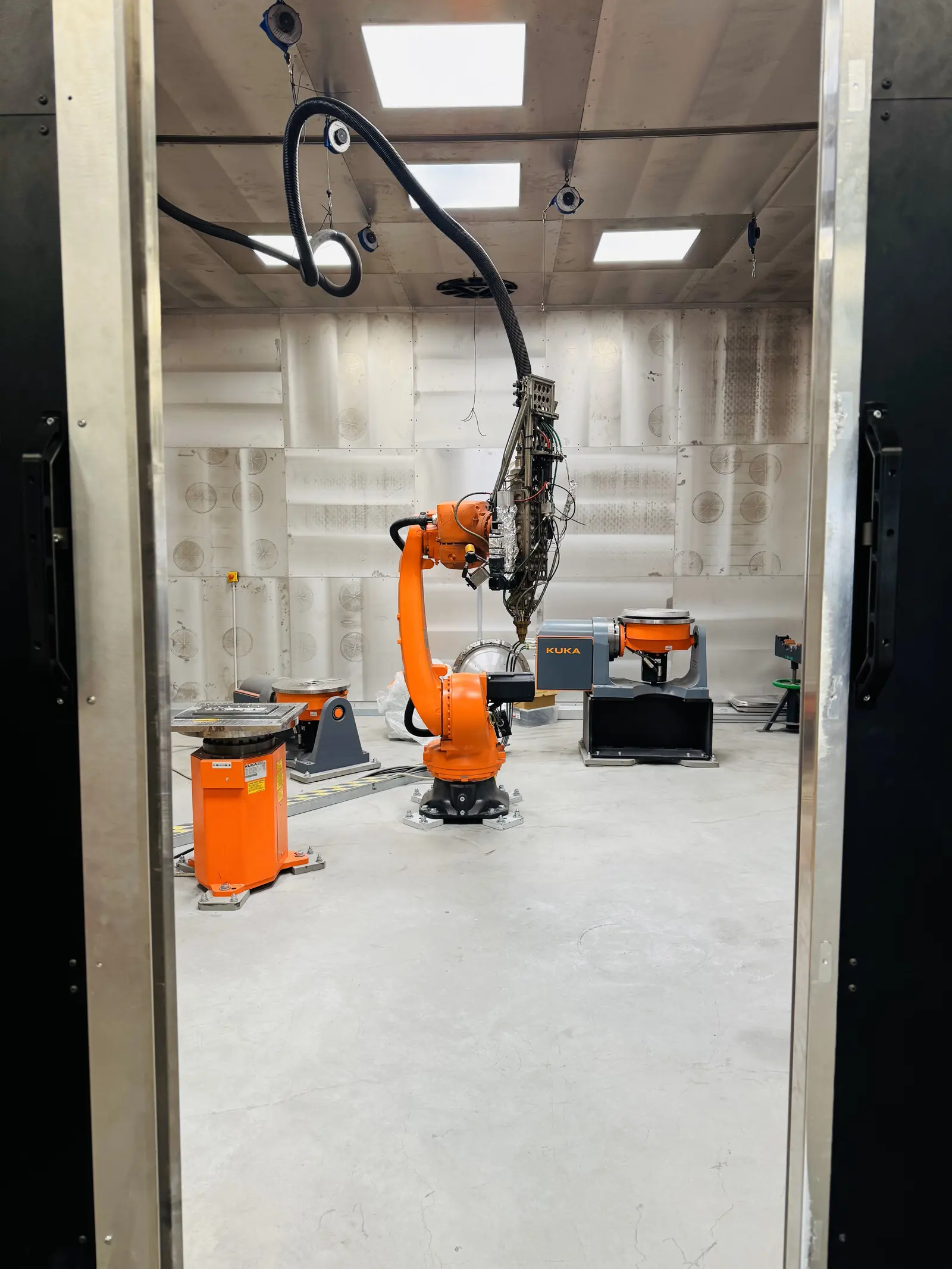
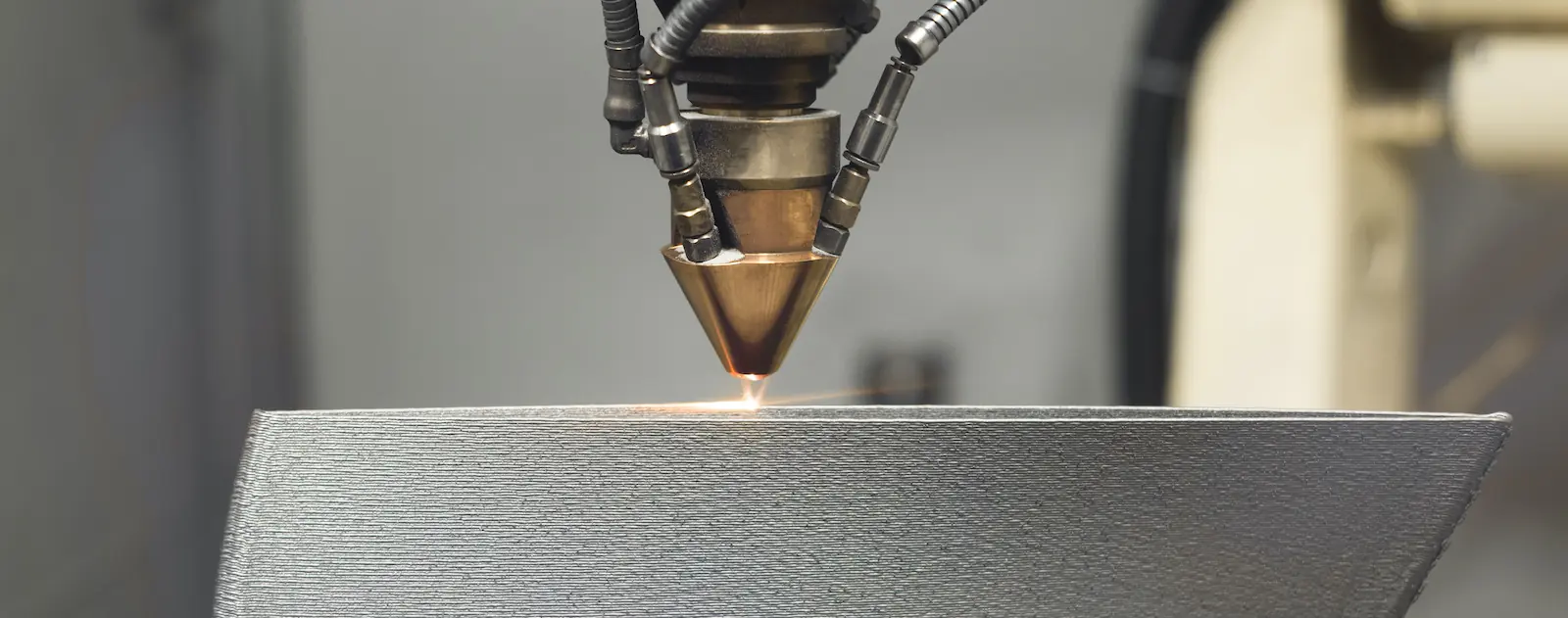
6-axis robotic LMD system for complex geometry, repair and cladding

LMD, SLM, hybrid

The right process is selected by part logic, not by acronym.

Exafuse uses a process-selection roadmap: LMD for scale and local material addition, SLM for fine powder-bed geometry, and hybrid routes when one workflow alone is not the best answer.

6-axis robotic LMD system for complex geometry, repair and cladding Route 01 LMD / DED

Choose deposition when the value is scale, local material addition, repair, modification or cladding on an existing part.

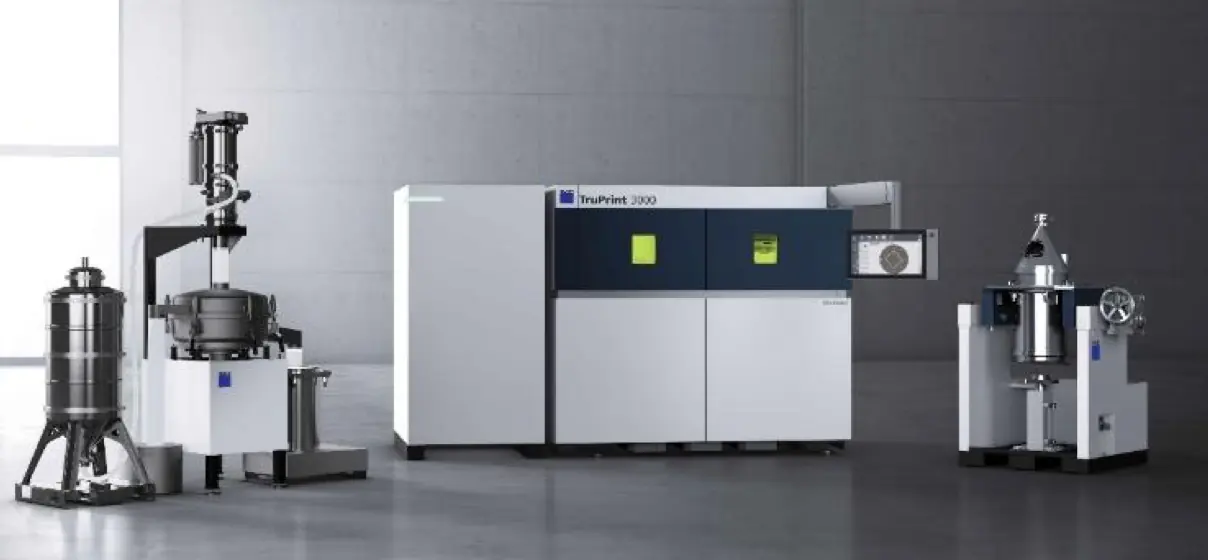
TRUMPF TruPrint 3000 SLM machine for compact detailed metal additive manufacturing Route 02 SLM / LPBF

Choose powder-bed fusion when compact geometry, internal channels, lattices or fine detail create the value.
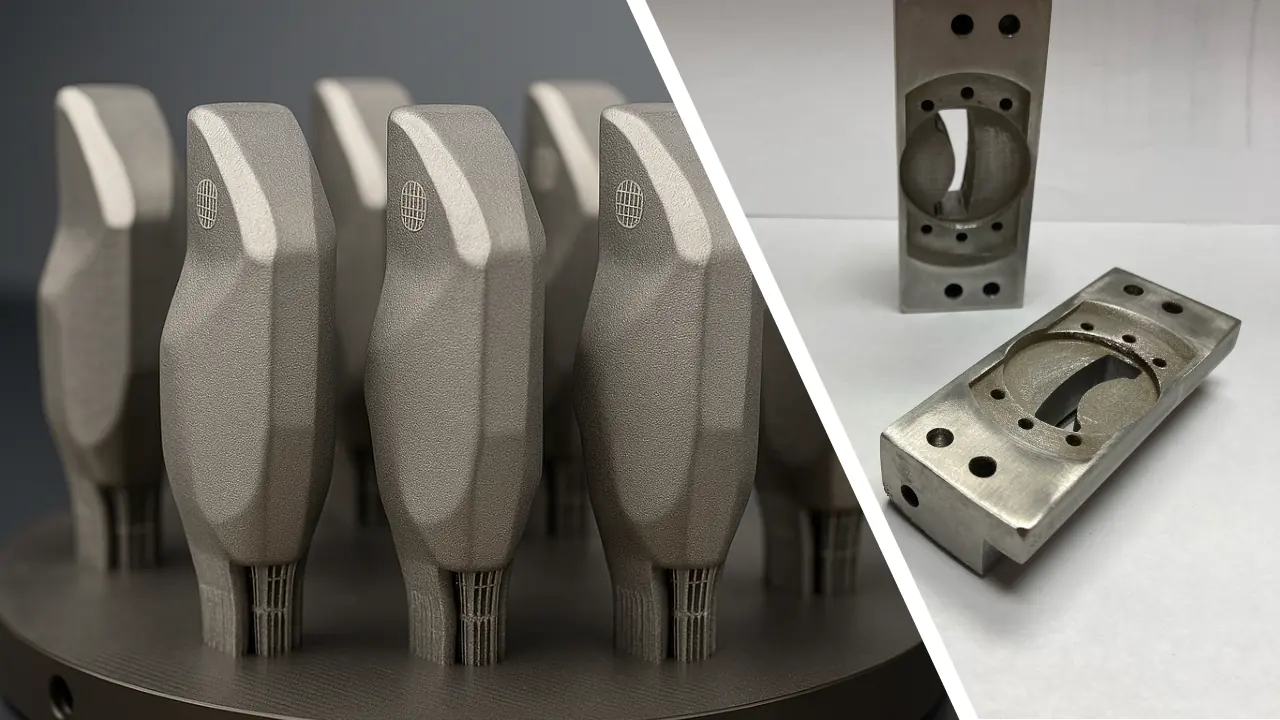
Powder-bed fusion visual for SLM comparison Route 03 Hybrid route

Combine LMD scale or repair logic with SLM detail when a single process would force the wrong compromise.
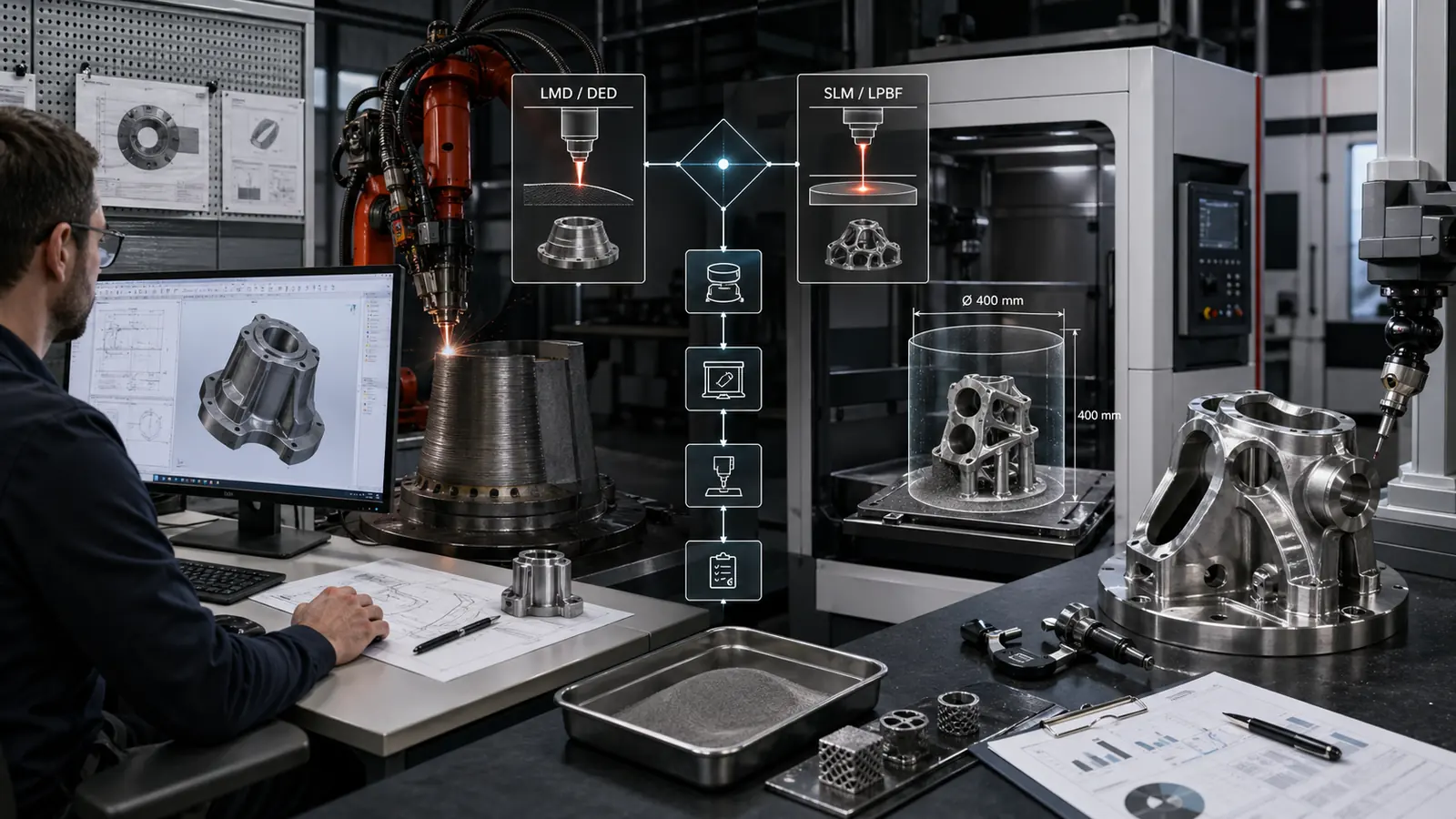
Manufacturing approachLMD deposits powder onto a substrate or free build surface. SLM melts powder in a powder-bed chamber layer by layer.
Typical fitLMD fits large, worn or locally modified parts. SLM fits compact parts that need fine detail throughout the geometry.
Buyer questionIs the value in scale, repair and local material addition, or in small detailed geometry and powder-bed design freedom?

Process chain

From part data to finished and inspected component.

Every LMD, SLM or hybrid project connects process planning, material choice, build strategy, finishing and inspection. Treating them together makes feasibility clearer from the first review.

1IntakeGeometry, material, duty, deadline, acceptance criteria.
2SelectLMD, SLM or hybrid route based on size, detail and function.
3BuildDeposition path, powder-bed route, heat input or hybrid build strategy.
4FinishMilling, grinding, heat treatment or polishing as needed.
5InspectMicroscopy, metallography and agreed documentation scope.

Large structural LMD proof

The Duisburg bridge story connects machine capability with engineering discipline.

Large LMD capability is credible only when geometry, path planning, monitoring, parameter development, finishing and validation are connected. The Duisburg bridge components give that proof path in one project.
CAD to manufacturable geometryArchitectural node geometry was adapted for LMD through overhang, wall-thickness, connection and transition review.
Long-build production controlThe six-node route included roughly 38 km of robot travel, monitoring and workflow optimization.
Inspection equipment for additive manufacturing quality review
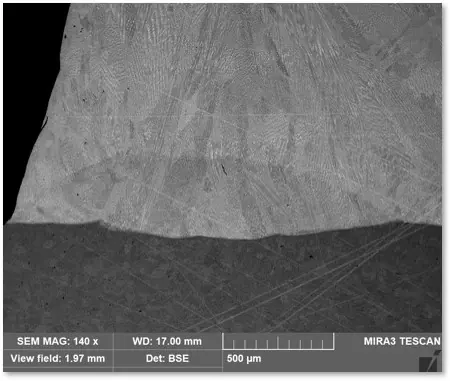
Validation route Parameter development, microstructure review and KIT validation support made the case stronger than a simple demonstration build. Open related page

Capabilities and equipment

3-axis Titan, 6-axis robotic LMD, TRUMPF SLM, finishing, quality and data support.

The equipment story is shown once here: two LMD routes for scale and geometry, SLM / LPBF for compact detail, post-processing, quality support and data-led process understanding.
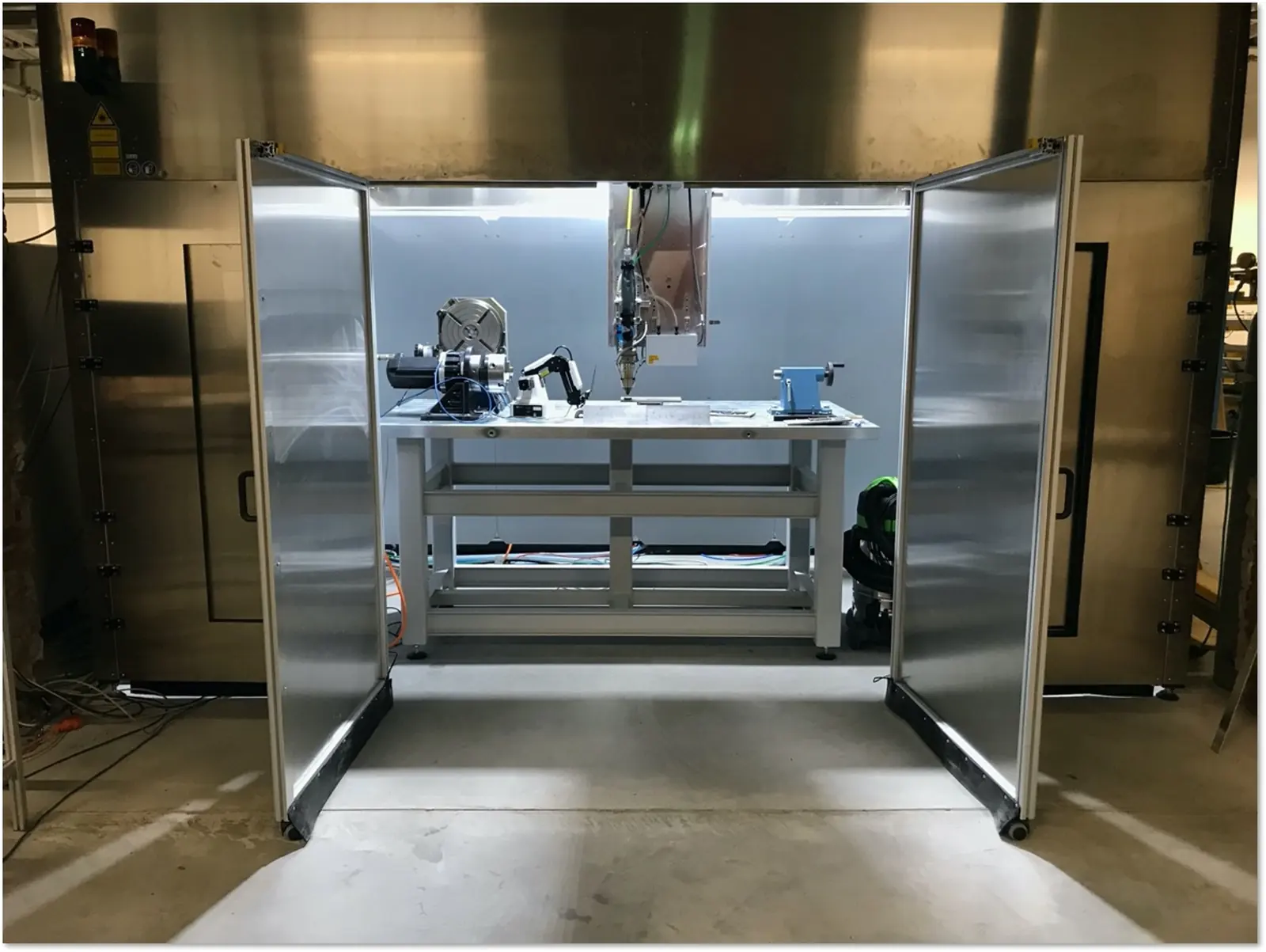
3-axis Titan LMD machine at Exafuse

3-axis Titan LMD

Large controlled LMD build space for near-net-shape parts, repair and cladding.

  • 4 m3 build space
  • Components up to 2 m x 1 m x 2 m (x-y-z)
  • Coaxial melt-pool monitoring and advanced sensors
  • LMD wall widths from 1.8 mm fine detail to 3.7 mm robust structures
6-axis robotic LMD system for complex geometry, repair and cladding

6-axis robotic LMD

Robotic deposition for complex shapes, larger reach and contour-following surfaces.

  • 6-axis robotics with 2-axis positioners
  • Rotary table supports components up to 1,000 kg
  • 6 x 5 x 4 m installation space
  • Zoom optics adjust wall thickness from 1.5 mm to 4.5 mm
TRUMPF TruPrint 3000 SLM machine for compact detailed metal additive manufacturing

SLM / LPBF machine

TRUMPF TruPrint 3000 for compact detailed metal parts.

  • 400 mm diameter build platform
  • 400 mm build height
  • 500 W single-laser system
  • Fit for internal channels, lattices and fine features
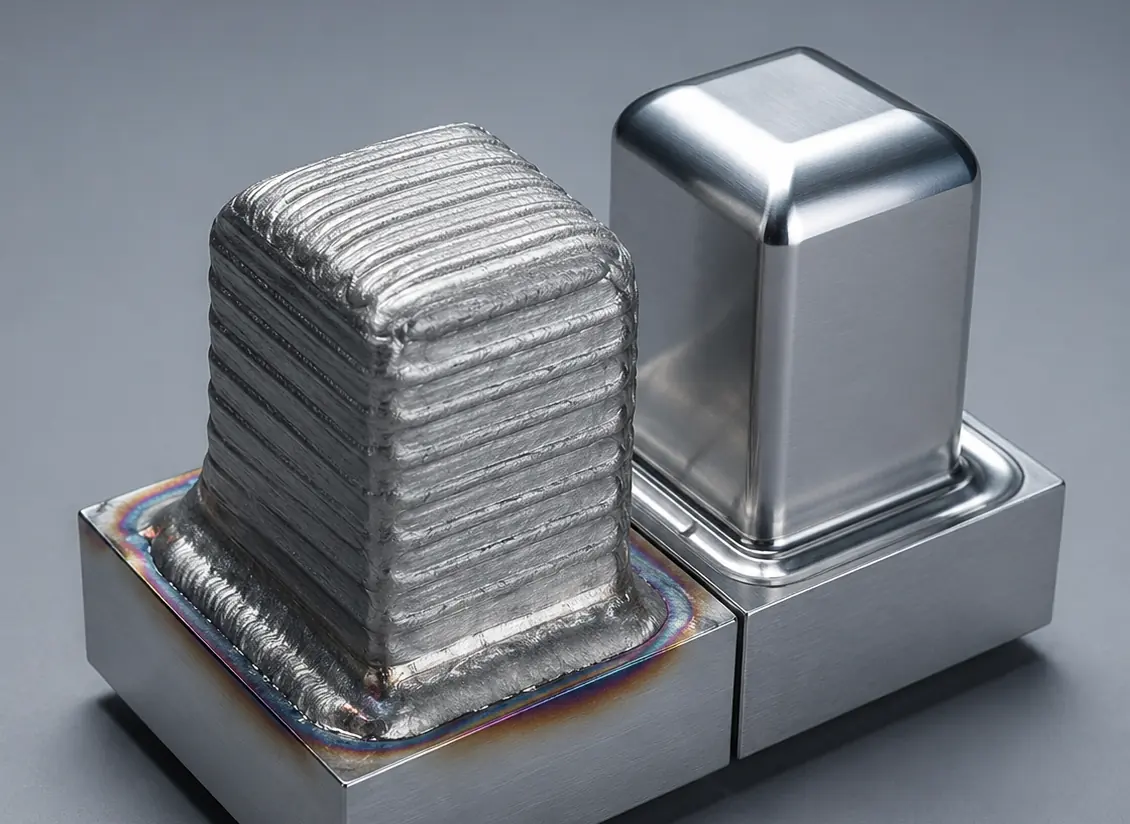
Finished component after LMD deposition and post-processing

Post-processing

Finished geometry matters as much as the deposited material.

  • Shows the step from LMD build-up to usable surface
  • Machining, grinding or other finishing is planned from the first feasibility review
  • Keep tolerance and heat-treatment claims project-specific until verified
Inspection equipment for additive manufacturing quality review

Quality support

Inspection and metallographic preparation support validation planning.

  • Microscopy and sample preparation where evidence is required
  • Useful for bond, layer and defect-risk discussions
  • Approved inspection visuals support validation planning without exposing customer data
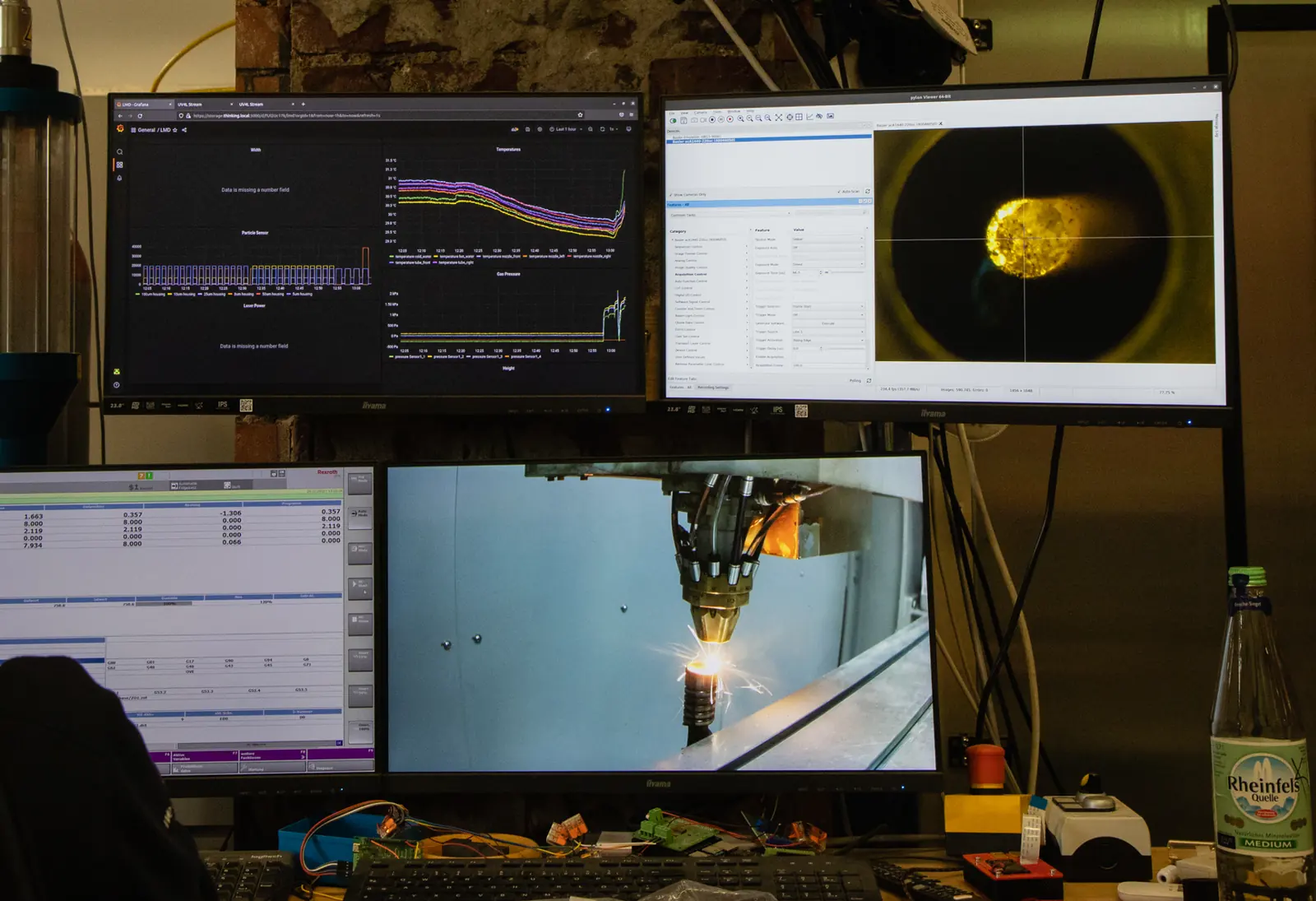
LMD process monitoring and melt-pool signal view

Computing / AI

Process monitoring supports data-led understanding of LMD and SLM work.

  • External monitoring and process observation can support R&D and validation discussions
  • Computing infrastructure helps handle process data and AI-assisted process understanding
  • Positioned as process observation and data support, not automatic quality control

Thin-wall and multi-material LMD

The public nozzle proof connects machine capability with process discipline.

A 750 mm water-cooled nozzle design produced by LMD used Inconel 625 in the inner structure and Inconel 718 in the outer structure and cooling ribs. The proof story is useful because it shows material zones, path planning and long-build stability together.
Geometry750 mm thin-walled structure with 1.8 mm wall context and cooling-rib features.
Laser Metal Deposition process adding metal to a component
Material zoning Inconel 625 and Inconel 718 assigned to different functional regions. Open related page
Build disciplineAround 50 hours, two uninterrupted printing days and more than 1,070 layers in the public proof story.

Integrated LMD workflow

The 130 mm drill proof connects build-up, coating, finishing and validation.

A public Exafuse video shows a 130 mm drill where LMD is used for both fabrication from powder and final wear-resistant anti-magnetic coating from an alloy containing tungsten carbide. The technology lesson is route planning, not a universal one-process promise.

BuildUse LMD to create the geometry when scale, material efficiency or fast iteration creates value.
CoatUse laser cladding logic for a local functional surface layer where duty requires it.
ValidateDefine bond, coating condition, finish and documentation before treating the part as released.

Research connection

Research projects belong next to the technology story.

Wide-bead deposition, rotating multispot optics, dynamic powder feeding and sensor-supported process control are research themes that help explain where large-part LMD productivity can improve.

Why wider beads matterLarge surfaces can require many narrow tracks. BreitbahnDED investigates wider tracks while keeping geometry, heat and quality in view.
Why monitoring mattersMore productive deposition routes need better visibility into temperature, melt-pool behavior, shape and process stability.
EIS-KW tooling routeForging-tool research connects SLM, LMD, cooling concepts, heat management, material route and wear evaluation.
Why buyers careResearch becomes relevant when it reduces feasibility uncertainty for large, repaired, coated or high-load tooling parts.

Quality and inspection

Quality is planned before the first bead is deposited.

Inspection planning defines what is checked, what evidence is produced, and which acceptance criteria matter for the part function.