
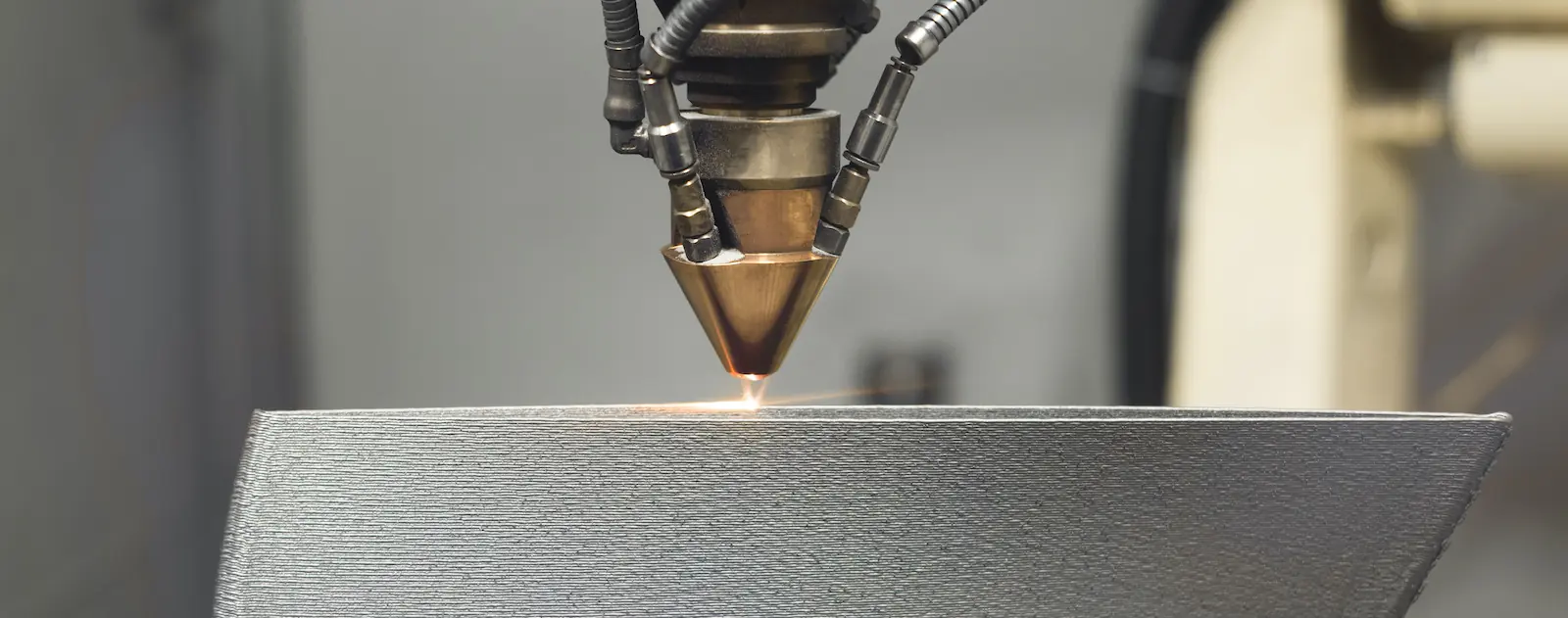
An LMD build-and-coat workflow is worth evaluating when a metal part needs both geometry creation and a functional surface layer. The route should be reviewed as one manufacturing chain: part geometry, base material, deposited material, coating function, finishing, inspection and release evidence. It is not enough to ask whether the part can be printed. The buyer should also ask whether the final working surface can do the job.
For the specific Exafuse proof story, use CS13: 130 mm Bombenbohrer LMD build-and-coat workflow. The case study is the right place for the process video, approved still images, public post link and the detailed drill story.
Who this article helps
This article is for buyers comparing whether a part should be machined, printed, coated, repaired, or handled as one connected additive workflow.
It is most useful for:
- Product-development teams that need a functional metal demonstrator, not only a visual prototype.
- Procurement teams evaluating whether geometry and surface function can be sourced together.
- Tooling and special-purpose component teams that need local wear, corrosion, sliding-contact or anti-magnetic surface behavior.
- Engineers comparing LMD build-up, laser cladding, machining, SLM / LPBF and hybrid routes.
- Technical evaluators who need the route to be inspectable and defensible.
Direct answer
LMD can be evaluated for build-and-coat workflows because the same process family can add material locally and create metallurgically bonded surface layers. That makes it useful when the part value comes from both shape and surface function.
The route is still project-specific. Feasibility depends on access, size, substrate, alloy compatibility, heat input, coating thickness, final machining or grinding, inspection and acceptance criteria.
What build-and-coat means
A build-and-coat workflow combines two questions that are often treated separately:
- How will the part geometry be created or rebuilt?
- Which surface needs a special function after the geometry exists?
In LMD, a laser creates a local melt pool and metal powder is fed into that pool. Depending on the job, the same process family can be used to:
- build new geometry from a substrate or base;
- add material only where the part needs it;
- modify a tool, edge or working zone;
- apply a cladded surface layer;
- combine near-net-shape manufacturing with later machining or grinding.
The key buyer point is sequence. If the coating is treated as an afterthought, material compatibility, dilution, finishing and inspection can become harder. A stronger route plans the geometry and surface duty together.
When one connected route is worth discussing
A combined LMD fabrication and coating route is worth evaluating when:
- the part needs both geometry and a functional surface;
- the surface requirement is local or tied to defined working zones;
- machining from solid stock would waste material or time;
- the part is too large, specific or urgent for a simple replacement route;
- a near-net-shape LMD route plus finishing is acceptable;
- the coating material can be reviewed against the base material;
- inspection criteria can be defined before processing;
- one connected workflow reduces coordination risk compared with separate suppliers.
When separate routes may be better
Another route may be better when:
- the part is simple and can be machined quickly from standard stock;
- the whole geometry needs fine powder-bed detail and fits SLM / LPBF better;
- the surface function cannot be achieved with a metallic cladded layer;
- the substrate or coating material combination creates unacceptable crack risk;
- coating, machining or inspection access is not practical;
- the buyer needs certified performance data before a first prototype exists;
- the part is low value and replacement is faster or cheaper.
Process chain to review
1. Geometry and access review
Start with CAD, drawings, sketches or photos. The first question is whether the laser, powder stream, fixturing and finishing tools can reach the target surfaces.
2. Material and coating function
Define the base material, deposited material family and surface function. The surface may need wear resistance, anti-magnetic behavior, corrosion resistance, high-temperature behavior, sliding-contact performance or a combination.
3. LMD build-up
The build-up step creates or restores geometry. Toolpath, heat input, overlap, deposition allowance and later machining stock matter because the as-deposited shape is rarely the final functional surface.
4. Functional coating
The coating step should be tied to the working surface. For hard wear-resistant routes, the review should include dilution, crack risk, toughness, layer thickness, substrate behavior and heat management.
5. Finishing
Machining, grinding, heat treatment or other finishing may be required. If final geometry matters, finishing should be planned before deposition starts.
6. Inspection and release
The release plan may include dimensional checks, visual inspection, surface crack checks, metallographic review, hardness evidence or other project-specific documentation. Bond quality should be validated through the agreed inspection route, not promised by wording alone.
Surface-function questions buyers should answer
Before asking for a build-and-coat quote, define:
- Which surfaces actually need the functional layer?
- Is the main problem abrasion, impact, sliding contact, corrosion, oxidation, heat or magnetism?
- Does the coating need to be machined or ground after deposition?
- Is a hard layer enough, or does the part also need toughness?
- How much dilution is acceptable?
- Which inspection method will prove the route is acceptable?
- Are photos, video, material names or process details allowed to be public?
Tungsten-carbide-containing and other hard-phase routes
Tungsten-carbide-containing routes are usually discussed when wear resistance is important. They should not be treated as a generic recipe. The final suitability depends on substrate, duty, toughness, dilution, finishing, heat input and validation scope.
Cost and lead-time implications
The cost of a build-and-coat route is not only deposition time. The main cost drivers are usually:
- geometry complexity;
- material and powder route;
- surface preparation and fixturing;
- build volume or coating area;
- machining or grinding allowance;
- inspection and documentation;
- quantity and repeatability;
- urgency and logistics.
The commercial question is whether one connected route reduces total risk compared with separate machining, coating, repair or replacement decisions.
What to send for a build-and-coat review
Send:
- CAD, drawing, sketch or photos of the target part;
- overall size, including critical dimensions;
- material or target alloy family;
- whether the part is a prototype, tool, spare, repair or production candidate;
- which surfaces need coating or special function;
- whether anti-magnetic, wear-resistant, corrosion-resistant or another property is required;
- final machining, grinding or finishing expectations;
- quantity and deadline;
- inspection or documentation required for release;
- whether any video, customer mark, alloy name or process detail must stay confidential.
Related proof case study
Use CS13: 130 mm Bombenbohrer LMD build-and-coat workflow as the detailed proof page.
Use A26: 24-hour LMD drill prototype for the rapid prototype angle. A26 is about speed and iteration. A30 is about evaluating the complete build-and-coat route.
Recommended next steps
Start with:
- Metal AM for the part-fabrication route.
- Laser cladding for the surface coating route.
- Materials for tungsten-carbide-containing and wear-resistant material logic.
- Quality and inspection for release planning.
- CS13 build-and-coat Bombenbohrer case study for the specific proof story.
- A26: 24-hour drill proof for the rapid prototype angle.
- A13: Alloy selection for laser cladding for material-family tradeoffs.
- A18: Hybrid manufacturing for build plus finishing logic.
- RFQ builder to package geometry and surface requirements together.
Send a build-and-coat review request
Send the geometry, material, required surface function, target finish, deadline and documentation needs. Exafuse can review whether LMD fabrication, laser cladding, SLM, machining or a hybrid route is the practical path.
FAQ
Can LMD fabricate a part and coat it in one workflow?
It can be evaluated. LMD can build or rebuild geometry and can also apply metallurgically bonded cladded surface layers when the substrate, powder and process route are suitable.
Is build-and-coat the same as hybrid manufacturing?
It is one hybrid-style workflow, but the term is more specific. Build-and-coat focuses on creating geometry and then adding a functional surface layer. Hybrid manufacturing can also include machining, grinding, heat treatment or other process combinations.
What does tungsten carbide add to a coating discussion?
Tungsten-carbide-containing routes are usually discussed when wear resistance is important. The final suitability depends on substrate, duty, toughness, dilution, finishing and validation scope.
How should anti-magnetic or wear-resistant behavior be specified?
Specify the required surface function, operating environment, target surface, inspection need and acceptance criteria. Do not rely only on the coating name or powder family.
Does a build-and-coat route avoid post-processing?
Usually no. Functional surfaces may still need machining, grinding, heat treatment or inspection before the part can be released.
Where is the specific 130 mm drill proof?
The specific story belongs in CS13: 130 mm Bombenbohrer LMD build-and-coat workflow. This article is the generalized guide.