
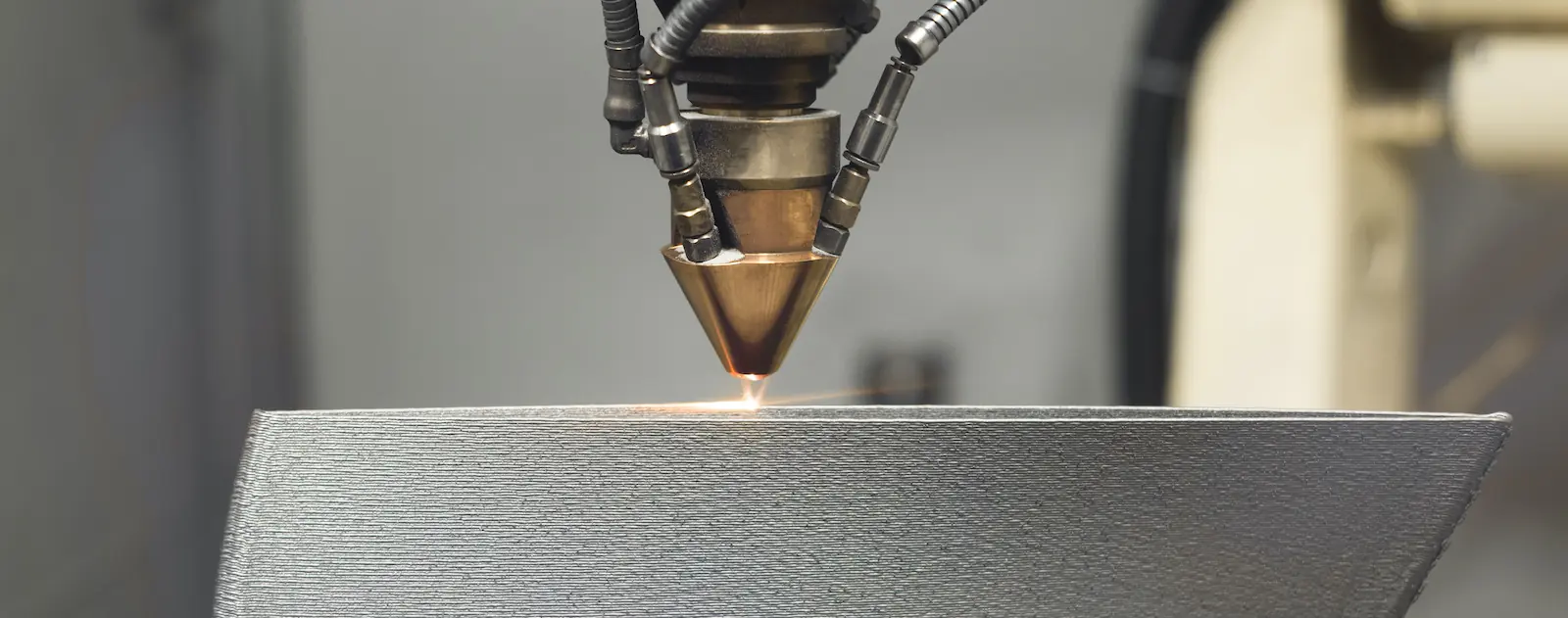
Exafuse has publicly shown a rapid LMD proof story: a functional drill, described publicly as a "Bombenbohrer," produced from metal powder with an antimagnetic coating in under 24 hours. The useful takeaway is not that every metal part can be delivered in one day. It is that Laser Metal Deposition can compress iteration when geometry, material, coating scope, finishing and acceptance criteria are clear enough at the start.
The project was shared with thanks to ZIPP Industries GmbH & Co. KG as a partner in pushing the application forward.
A later public video adds a second useful angle: the drill was shown as a 130 mm Bombenbohrer workflow where LMD supports both geometry fabrication and final wear-resistant anti-magnetic coating from an alloy containing tungsten carbide. A26 should remain the rapid-prototype article; CS13 holds the specific build-and-coat proof case, and A30 covers the general workflow framework.
Who this article helps
This article is for buyers who need speed, but still need a realistic manufacturing discussion.
It is most useful for:
- Product-development teams testing whether a metal prototype can move from concept to working geometry quickly.
- Maintenance and production teams that need a functional special tool, fixture or replacement geometry evaluated fast.
- Buyers comparing LMD with machining from solid stock, conventional welding or waiting for a standard supply route.
- Technical teams that need both geometry and a functional coating, such as an antimagnetic, wear-resistant or corrosion-resistant surface.
What the 24-hour drill example proves
The drill example proves that rapid LMD work can be more than a visual demo when the project is scoped correctly.
It shows four useful LMD advantages:
- Fast iteration: metal powder can become a working geometry quickly when the build, finishing and coating route are defined.
- Material efficiency: LMD adds material where the function is needed instead of removing everything from a large block.
- Custom surface function: the same project logic can include a coating requirement, such as antimagnetic behavior or wear resistance, when the material route is suitable.
- Design flexibility: local deposition and hybrid finishing can support geometries that would be slow, wasteful or awkward by purely subtractive routes.
The result is best understood as a proof of process speed and coordination, not as a standard lead-time guarantee.
Why LMD can be fast for the right prototype
Laser Metal Deposition creates a laser melt pool and feeds metal powder into that pool. The toolpath places material only where it is needed.
That can make LMD attractive for rapid prototypes when:
- The part does not need full powder-bed detail across every surface.
- The value is in local build-up, a functional geometry or a surface layer.
- Post-machining or finishing can be planned from the beginning.
- The material and coating route are clear enough for a controlled first build.
- The acceptance criteria are realistic for a prototype or first functional sample.
For many projects, the fastest route is not "print everything and hope." It is a hybrid route: deposit near-net geometry, finish the functional surfaces and inspect what matters.
Where the antimagnetic coating fits
The public proof story describes the drill as having an antimagnetic coating. That detail matters because it shows how buyers should think about laser-based additive manufacturing: not only as shape creation, but as a route to combine geometry and surface function.
In other projects, the coating question might be different:
- Wear resistance.
- Corrosion resistance.
- Oxidation or high-temperature protection.
- Sliding-contact or galling behavior.
- Local rebuild plus a more suitable working surface.
The coating route still depends on substrate, dilution, layer thickness, finishing, inspection and service environment. A named surface function should start the technical review, not replace it.
When a 24-hour result is realistic
A one-day turnaround is most realistic when the request is narrow, the input data is usable and the release scope is limited.
Helpful conditions include:
- Clear CAD, drawing, sketch or physical reference.
- Known material or acceptable material-family direction.
- Simple enough geometry for fast toolpath and finishing planning.
- No complex certification package required for the first sample.
- A defined coating or surface function rather than a vague "better material" request.
- Fast decision-making on tradeoffs such as finish, tolerance and inspection.
If the part needs extensive reverse engineering, unknown base-material identification, qualification testing, complex machining or customer approval loops, the lead time changes.
When LMD is not the shortcut
LMD is not automatically the fastest or cheapest route.
It may not be the right shortcut when:
- The part is simple and can be machined quickly from standard stock.
- The geometry needs very fine powder-bed detail across the full component.
- The coating function is not compatible with the substrate or finishing route.
- The expected tolerance requires extensive machining after deposition.
- The buyer needs full production qualification before using the first part.
- The material, dimensions or duty are unclear.
A serious rapid-prototype discussion should therefore include what the part must prove in the first iteration.
What buyers should send for a rapid LMD prototype review
To evaluate a similar request, send:
- CAD, drawing, sketch or photos of the target geometry.
- Material or required material family.
- Whether the part is a working prototype, tool, fixture, replacement geometry or coating trial.
- Overall dimensions and approximate weight.
- Functional surfaces and tolerance expectations.
- Coating or surface requirement, such as antimagnetic, wear or corrosion behavior.
- Quantity and target deadline.
- Inspection or documentation needed for the first sample.
If speed matters, say which constraints can move and which cannot. A fast prototype is usually a tradeoff between geometry, finish, evidence and delivery time.
Recommended next steps
Start with the closest page or tool:
- Metal AM for new-build LMD, SLM or hybrid manufacturing.
- Laser cladding for custom coating and surface function.
- LMD vs SLM decider if the process route is unclear.
- Estimator for an early cost direction.
- RFQ builder to package the request.
- Hybrid manufacturing with LMD and CNC for the finishing route.
- Alloy selection for laser cladding for coating material logic.
- CS13: 130 mm Bombenbohrer LMD workflow for the full build-and-coat video story.
- A30: Build-and-coat workflow guide for the general route-selection framework.
Send a rapid prototype request
Send the geometry, material, target function, coating requirement, finish expectation and deadline. Exafuse can review whether LMD, SLM, laser cladding or a hybrid route is the practical first path.
Request a rapid LMD prototype review
FAQ
Can LMD really make a functional part in 24 hours?
It can in the right scoped case, and Exafuse has publicly shared a 24-hour drill proof story. That should be treated as a project example, not as a guarantee for every part.
Is LMD only for prototypes?
No. LMD can support prototypes, local build-up, repair, modification, cladding and near-net-shape manufacturing. The right route depends on part geometry, material, finishing and inspection requirements.
Can a coating be added as part of the same project logic?
Potentially, yes. The drill proof story included an antimagnetic coating. Other coating goals can include wear, corrosion, oxidation or sliding-contact behavior, but the material route must be reviewed for the substrate and service environment.
What makes a rapid LMD request easier to quote?
Useful CAD or drawings, a known material direction, clear functional surfaces, realistic tolerance expectations, a defined coating requirement and a clear deadline make the review much faster.