
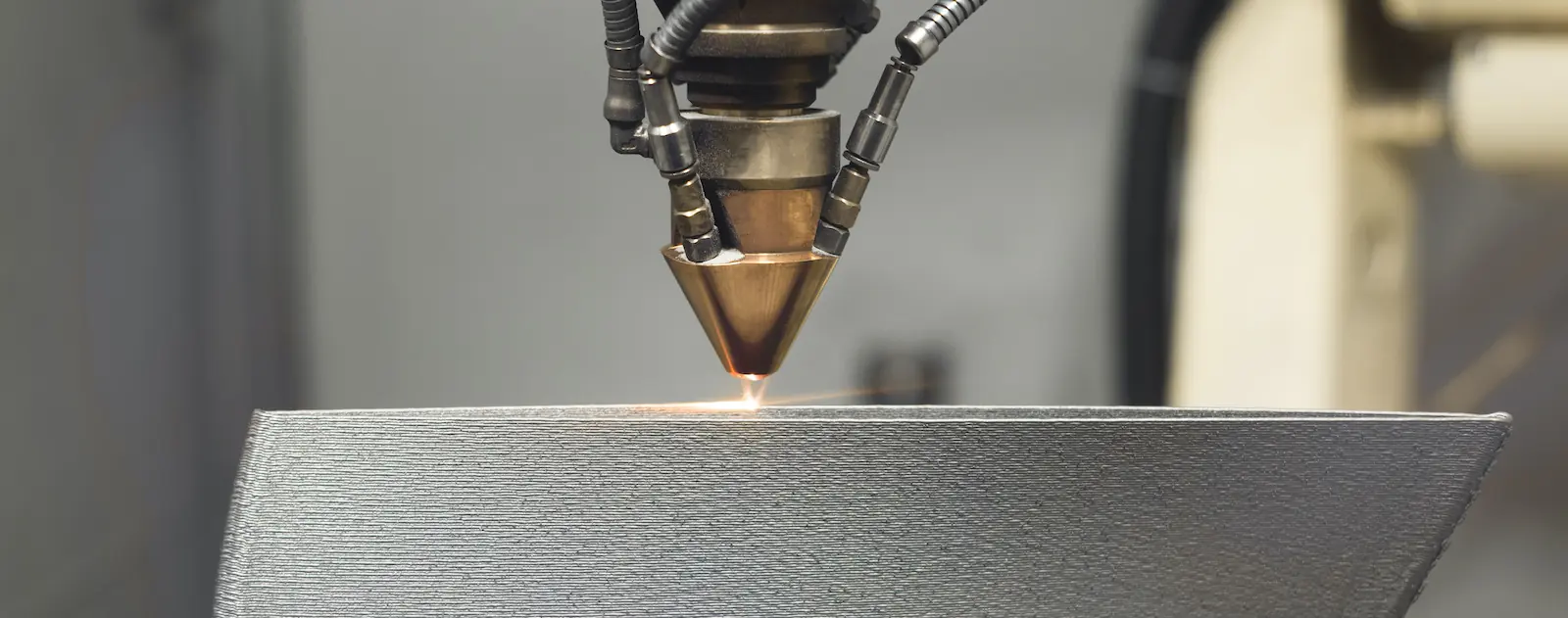
Exafuse publicly showed a 130 mm "Bombenbohrer" drill workflow in which Laser Metal Deposition (LMD) was used for both part fabrication and final surface coating. The proof route connects metal powder, drill geometry and a final wear-resistant anti-magnetic coating from an alloy containing tungsten carbide.
This proof page is the specific story. Use A30: How to Evaluate LMD Build-and-Coat Workflows as the generalized buyer guide.
Case snapshot
| Case element | Detail |
|---|---|
| Component | 130 mm "Bombenbohrer" drill / functional tool demonstrator |
| Public proof format | Full process video and public post reference, to be linked when final URLs are approved |
| Process route | LMD part fabrication followed by LMD functional coating |
| Geometry story | Drill structure built directly from metal powder |
| Surface story | Final wear-resistant anti-magnetic coating from an alloy containing tungsten carbide |
| Buyer relevance | One connected route for geometry, surface function, finishing and validation planning |
| Related guide | A30 generalized build-and-coat workflow article |
The problem
Many industrial tool and special-part projects are not only shape problems. The part may need a specific geometry and a working surface with a different duty: wear resistance, anti-magnetic behavior, sliding contact performance, corrosion resistance, heat resistance or another local function.
If the geometry and surface are planned separately, the project can become harder to quote and harder to validate. Material compatibility, dilution, coating thickness, finish, heat input and inspection need to be considered before the build starts.
The Bombenbohrer proof is useful because it shows shape and surface function as one connected LMD route.
LMD fabrication route
The first part of the proof is part fabrication. LMD builds the drill geometry from metal powder by creating a local melt pool and feeding powder into it along a controlled path.
For buyers, the useful point is not that every tool should be built this way. It is that LMD can create functional metal geometry where the part value comes from local build-up, material placement, fast iteration or a geometry that is better handled by additive deposition than by machining from a large block.
Functional coating route
The second part of the proof is the final coating. The public wording describes a wear-resistant anti-magnetic coating from an alloy containing tungsten carbide.
Why the video matters
The full process video is important because it makes the route visible. It can show the sequence from powder-fed LMD fabrication to functional coating and finished part handling.
Result framing
Exafuse demonstrated that LMD can be used to fabricate a functional drill geometry and add a final functional coating within one process family. The route is relevant when buyers need both additive build-up and a surface layer with defined working behavior.
What buyers can learn
This case shows that build-and-coat projects should be treated as a complete chain:
- define the geometry and the surface function together;
- select the material route around both shape and duty;
- decide where LMD adds value compared with machining, SLM / LPBF, coating alone or replacement;
- plan finishing before deposition;
- define inspection evidence before release;
- keep video and photos as proof support, not as substitutes for engineering validation.
What to send for a similar build-and-coat review
Send:
- CAD, drawing, sketch or photos of the part;
- overall size and critical dimensions;
- material or required alloy family;
- which surfaces need coating or special function;
- whether the surface needs wear resistance, anti-magnetic behavior, corrosion resistance or another property;
- target finish and tolerance;
- whether machining or grinding is allowed after deposition;
- quantity, deadline and urgency;
- inspection or documentation requirements;
- whether photos, video, material names or partner names can be used publicly.
Related article
Use A30: How to Evaluate LMD Build-and-Coat Workflows as the generalized education page. Use this CS13 case study as the detailed proof page.
Use A26: 24-hour LMD drill prototype for the earlier rapid execution angle. A26 is about speed and iteration; CS13 is about the full production-cycle video and integrated surface-function story.
CTA
Send the geometry, material, required surface function, target finish, deadline and documentation needs for a build-and-coat review.