
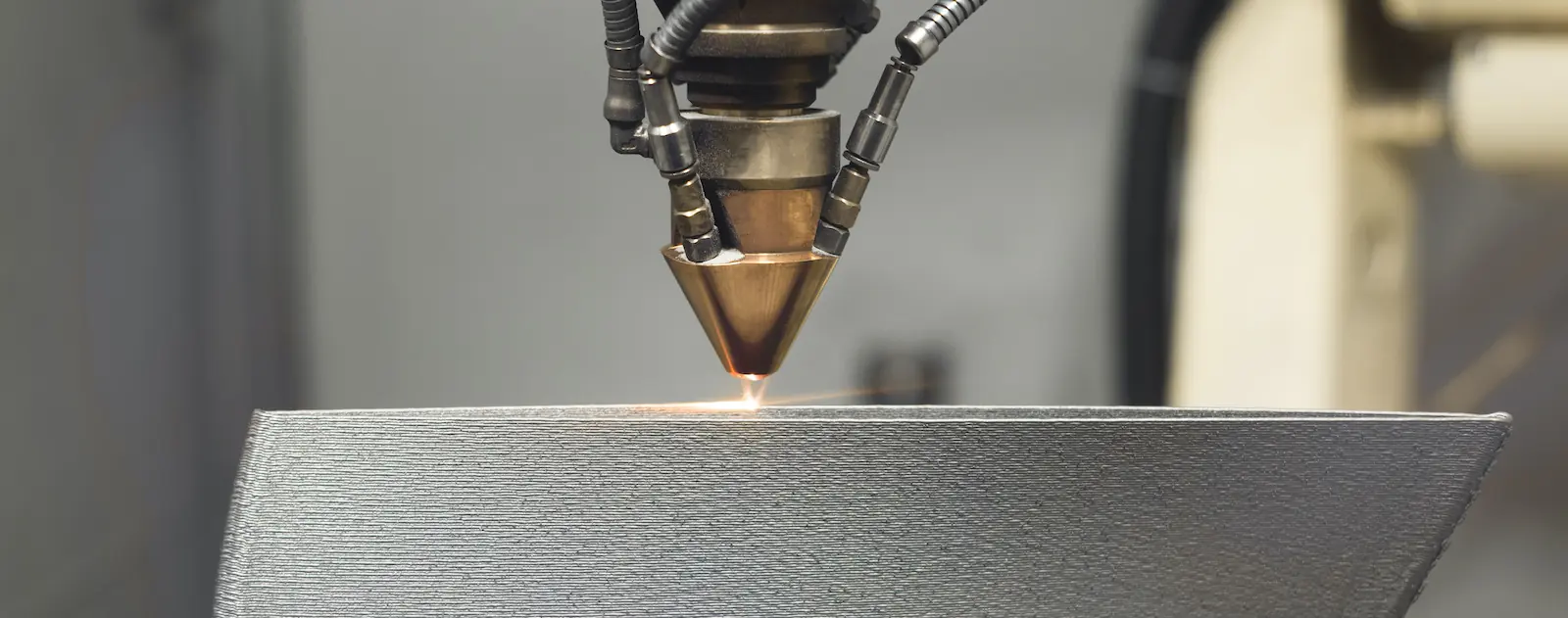
LMD becomes attractive for hard-to-machine alloys when the part is large, the raw material is expensive, and only selected geometry needs to be added or rebuilt. Exafuse's public material proof points include Inconel 625, Inconel 718, C276, C282, C939, copper alloys such as Cu 99.95% and CuNi3Si, and specialty steels such as 4116, H500 and PH-14. Those names matter because expensive or difficult materials often make near-net-shape deposition more attractive. That does not replace machining. It changes where machining creates the most value. For hard-to-machine material families discussed under LMD, DED, or Laserauftragschweißen, the key question is usually not whether additive sounds advanced. It is whether targeted deposition improves the cost and manufacturing logic of the part.
Why difficult alloys change the cost equation
Some alloys are costly to buy, slow to machine, aggressive on tooling, or difficult to process efficiently when the starting form is a large solid block. If the required geometry is local rather than full-volume, additive deposition can change the economics by reducing waste material and focusing effort on the functional zones.
Where LMD usually helps most
The strongest cases are large parts, local features, repairs, or near-net buildups that will still be machined afterward. This is especially true when the alternative would be removing a large amount of expensive material just to keep a small amount of finished geometry.
Buyers often use search terms such as nickel alloys, Inconel-family materials, copper alloys, specialty stainless steels or precipitation-hardening steels in this context. The useful engineering question is not the trade name by itself. It is whether the alloy, geometry, and finishing route make additive buildup more rational than full subtractive manufacture.
Multi-material proof with Inconel 625 and Inconel 718
Exafuse has publicly shown a 750 mm water-cooled nozzle design manufactured by LMD using Inconel 625 for the inner structure and Inconel 718 for the outer structure and cooling ribs. The proof build was described with 1.8 mm thin-wall context, more than 1,070 layers and around 50 hours of uninterrupted printing.
For hard-to-machine alloy buyers, the lesson is practical: the value of LMD is strongest when expensive material can be placed near-net and by function. Instead of machining a complex geometry from one expensive block, the route can be reviewed zone by zone, with material choice, path planning, finishing and inspection defined together.
Where machining still wins
Machining remains the better route when the part is small, the geometry is simple, the tolerances are tight everywhere, or the additive stage would not remove enough cost or lead-time burden. If the whole part still has to be machined heavily, LMD may add complexity without enough return.
Material compatibility and thermal behavior still matter
Hard-to-machine does not automatically mean easy-to-deposit. Substrate compatibility, cracking tendency, dilution behavior, heat flow and the expected heat cycle still have to be reviewed. That is especially important for nickel-family, copper-family and high-performance steel routes. A high-value alloy only helps if the deposition route is technically stable and the finished part can still be released with confidence.
Most real jobs are hybrid, not purely additive
The common industrial route is additive plus finishing. Material is deposited where needed, then machined or ground back to the required interfaces and tolerances. That is why feasibility should include not only deposition strategy but also stock allowance, datum planning, and the post-machining plan.
What to review before choosing this route
Buyers should compare the cost and lead-time logic of three options: machining from stock, repairing or modifying the existing part, and additive buildup plus finishing. The winning route depends on material cost, geometry, delivery pressure, and how much of the part actually needs high-performance alloy material.
What to send for a feasibility review
Send the part geometry, the base or target alloy if known, the critical functional zones, and the tolerances that matter after finishing. If the request names Inconel 625, Inconel 718, C276, C282, copper, CuNi3Si, 316L, 4116, H500, PH-14 or another specific alloy, include whether that grade is mandatory or only a starting assumption. For multi-material designs, mark which regions need which material and why. It also helps to describe whether the part is a new build, a repair, or a local feature-addition case.